
WHMCS for Hosting Startups: Is It the Right Choice in 2026?
TL;DR
- WHMCS automates billing, provisioning, support for hosting startups, replacing manual spreadsheets with instant client account creation.
- Solves recurring billing pains by generating invoices, charging cards, suspending non-payers automatically for reliable cash flow.
- Essential for volume hosts selling shared/VPS/reseller plans expecting 24/7 instant setup; manual fails beyond 10 clients.
- Startup pricing starts low for 250 clients, includes free licenses via providers like Skynethosting; factor as COGS not overhead.
- Core features: control panel integration, client portals, Stripe/PayPal gateways, knowledgebase to reduce support workload.
- Setup checklist covers general settings, automation triggers, simple pricing tiers; test thoroughly before launch.
Starting a hosting business is exciting. You have your servers lined up, your brand logo looks sharp, and you are ready to take on the world. But then, the reality hits you. You aren’t just selling server space; you are managing a complex web of invoices, support tickets, and server provisioning.
If you have been researching how to manage all this, you have definitely come across the acronym WHMCS. It is the giant in the industry. But as a startup founder in 2026, you might be asking yourself: “Do I really need this heavy-duty software right now?”
I have been in this industry for over a decade. I have seen founders try to run everything via spreadsheets, and I have seen others overspend on enterprise tools before they had their first customer. Today, we are going to look at whether WHMCS is the right fit for your new hosting venture, or if it is overkill.
Let’s figure out if this is the tool that helps you scale, or just another expense on your balance sheet.
What Is WHMCS and Why Do Hosting Startups Use It?
If you are new to the game, WHMCS stands for Web Host Manager Complete Solution. It is a bit of a mouthful, but the name is accurate. It is designed to handle almost every aspect of a hosting business that isn’t the actual server hardware.
Core purpose of WHMCS
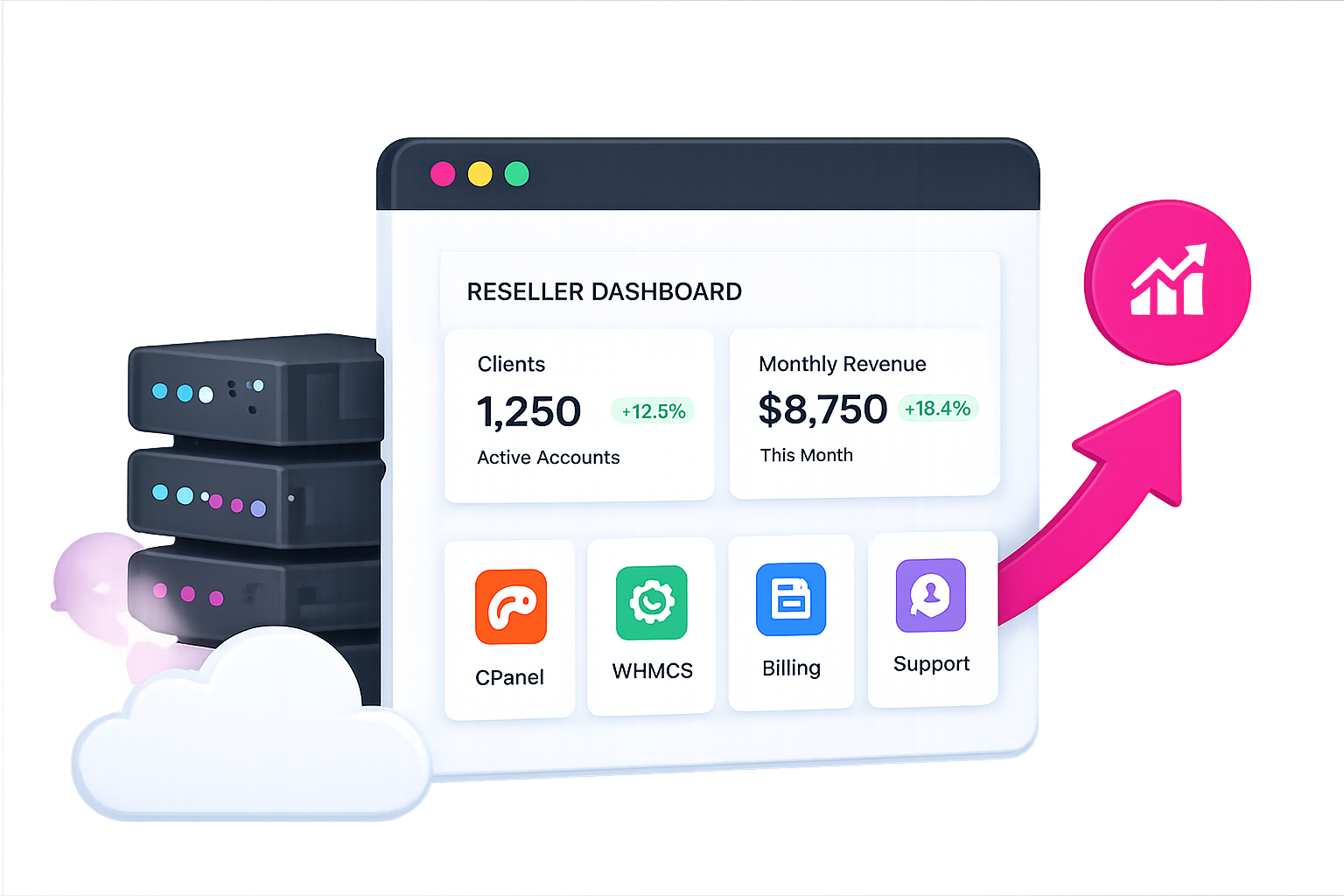
Think of WHMCS as the brain of your operation. Your server (like cPanel or Plesk) is the engine that powers the websites, but WHMCS is the dashboard that drives the car.
It bridges the gap between your customers and your servers. When a client buys a hosting plan on your website, WHMCS takes that order, collects the money, talks to the server to create the account, and sends the login details to the client. It does all of this while you are asleep.
Problems WHMCS solves for startups
Without automation software, here is what your day looks like:
- You get an email order.
- You manually log into PayPal to check if they paid.
- You log into your server to create their space.
- You type out a welcome email with their passwords.
- You set a reminder to invoice them again in 30 days.
This works for five clients. It is annoying with ten. It is impossible with fifty. WHMCS eliminates the manual labor involved in the customer lifecycle. It turns a 20-minute manual process into a 2-second automated event.
When manual billing stops working
The biggest pain point for startups is recurring billing. Hosting is a subscription business. If you are manually sending invoices every month, you will make mistakes. You will forget to suspend non-payers, or you will forget to send an invoice entirely.
WHMCS handles the entire billing cycle automatically. It generates the invoice, charges the credit card, marks it as paid, and if the payment fails, it eventually suspends the account. This reliability is why most startups look at it seriously.
Do Hosting Startups Really Need WHMCS?
Just because everyone uses it doesn’t mean you have to. However, the hosting industry has standards that customers expect.
Early-stage hosting operations
If you are launching a very niche boutique agency where you host 10 high-ticket clients and you manage everything for them, you might not need WHMCS immediately. You can invoice them via Quickbooks or Xero.
But if you are planning to be a volume host—selling shared hosting, reseller plans, or VPS to the general public—automation isn’t a luxury; it’s a requirement. Customers in 2026 expect instant gratification. If they pay at 2:00 AM, they want their website live at 2:01 AM.
Signs it’s time to automate
How do you know if you are ready?
- You are missing renewals: You realize a client hasn’t paid in three months because you forgot to ask.
- Support is overwhelming: You are answering simple questions like “what is my password?” that a client portal could answer.
- ** provisioning delay:** Clients are complaining that they paid hours ago and still don’t have access.
Manual tools vs automation trade-offs
The trade-off is simple: Time vs. Money.
Manual tools (spreadsheets, basic invoicing apps) are cheap or free. But they cost you hours of administration time. Automation tools like WHMCS cost a monthly fee, but they buy you freedom. For a startup founder, your time is your most valuable asset. If you spend 10 hours a month on billing, and WHMCS costs less than your hourly rate for those 10 hours, the math solves itself.
How Much Does WHMCS Cost for Startups?

Pricing is always a concern for a bootstrapped business. WHMCS has changed its pricing model over the years, moving to a tiered structure based on the number of active clients you have.
Entry-level license overview
For a startup, you will usually start on the lowest tier. This usually covers up to 250 active clients. In the grand scheme of business expenses, this is relatively low. It allows you to get your foot in the door without a massive enterprise contract.
However, you need to keep an eye on the “hidden” costs. You might need a payment gateway (like Stripe or PayPal) which takes transaction fees. You might want a custom theme so your billing area looks like your main website.
Budget planning for startups
When I advise new hosts, I tell them to factor the license cost into their “Cost of Goods Sold” (COGS). Don’t look at it as overhead; look at it as a production cost.
If you are charging $5/month for hosting, you need to ensure your margins cover the server cost, the support cost, and the software automation cost.
Avoiding unnecessary add-ons
Here is a pro tip: WHMCS has a marketplace full of shiny objects.
You will see modules for advanced SEO tools, fancy website builders, and complex security plugins. As a startup, you do not need 90% of them.
Stick to the core license. Get your billing and provisioning working perfectly. Do not bloat your monthly expenses with add-ons that you “might” use someday.
What WHMCS Features Matter Most for Startups?
WHMCS is massive. It has thousands of settings. But for a hosting automation for startups strategy, you only need to focus on four key areas.
Automated billing and invoicing
This is the bread and butter. You need to configure your tax rules (very important!), your currency settings, and your automation triggers.
- How many days before the due date should the invoice generate?
- When should the account be suspended if they don’t pay?
- When is the account terminated (deleted) completely?
Getting these rules right ensures cash flow consistency.
Control panel provisioning
You need to connect WHMCS to your server (e.g., WHM/cPanel or DirectAdmin). This allows the software to “talk” to the server.
For a startup, the “Module Create” function is magic. It means when a payment is marked “Complete,” WHMCS sends a command to the server to build the account. No human intervention required.
Client portal essentials
Your client portal is where your customers live. They log in here to pay bills, upgrade their package, and open support tickets.
For a startup, this makes you look professional. A clean, branded client area builds trust. It tells the customer, “This is a real company, not just a hobbyist in a basement.”
Payment gateway integration
You need to get paid. WHMCS integrates with almost everything.
For 2026, I recommend sticking to the big players: Stripe for credit cards and PayPal as a backup. These are trusted by consumers. WHMCS makes integrating these easy—usually just copying and pasting API keys.
How to Set Up WHMCS for a Hosting Startup
Setting this up can feel intimidating. It is a complex piece of software. Take it one step at a time.
Hosting environment requirements
WHMCS is a PHP script. You need to install it on a server.
- Security: Do not install WHMCS on the same shared server where you host your clients if you can avoid it. If that server goes down, your billing system goes down too.
- Requirements: You need the correct version of PHP and the IonCube Loader (a tool that decrypts the WHMCS code). Most reseller hosting providers, like Skynethosting.net, ensure these are pre-installed for you.
Initial configuration checklist
Before you launch, run through this list:
- General Settings: Set your company name and email.
- Automation Settings: Decide when invoices are sent.
- Currencies: Are you selling in USD, GBP, EUR?
- Payment Gateways: Test them with a $1 transaction.
- Support Departments: Create “Sales” and “Support” queues.
Product and pricing setup
This is where many fail. They create 50 different hosting plans.
Keep it simple. Create three shared hosting plans (e.g., Starter, Business, Pro). Enter the pricing for monthly and annual terms.
WHMCS allows you to offer discounts for annual payments—use this! It improves your cash flow significantly.
WHMCS vs Alternatives for Hosting Startups
Is WHMCS the only game in town? No. But it is the standard. Let’s look at WHMCS alternatives for beginners.
WHMCS vs ClientExec
ClientExec is a solid competitor. It is generally cheaper and covers the basics well. It handles billing and provisioning.
- Pros: Cheaper, good interface.
- Cons: Fewer third-party integrations than WHMCS. If you want a specific plugin later, it might not exist for ClientExec.
WHMCS vs Blesta
Blesta is known for being developer-friendly because much of its code is open. It is secure and fast.
- Pros: Great code quality, very secure.
- Cons: The learning curve can be steeper, and the ecosystem of themes/plugins is smaller than WHMCS.
When cheaper tools make sense
If you have zero budget and you are a developer yourself, you might look at open-source billing scripts. However, be careful. Security updates are vital.
If your business model is very simple (e.g., one flat fee for everyone), you could even use a recurring billing tool like Bill.com and provision manually. But for scaling a hosting business, WHMCS wins on integration.
Common Mistakes Hosting Startups Make with WHMCS
I have learned these the hard way, so you don’t have to.
Over-automation too early
You can set WHMCS to automatically delete a client’s website if they are 30 days late on payment.
Don’t do this immediately. As a startup, you want to save every customer. Sometimes a personal email (outside the system) can save a client who just forgot to update their credit card. Automate the suspension, but maybe keep the termination manual for the first year.
Incorrect pricing structures
WHMCS allows for complex pricing (setup fees, prorata billing).
New hosts often mess up “prorata billing” (charging everyone on the 1st of the month). It can result in a client signing up on the 29th and getting a bill for two days. This confuses people. Stick to “anniversary billing” (billed on the day they signed up) to keep it simple.
Poor client communication setup
WHMCS sends emails for everything. “Invoice Created,” “Invoice Payment Confirmation,” “Welcome Email,” “Ticket Opened.”
If you don’t customize these emails, they sound robotic. Spend time rewriting the “Welcome” email. Add your personality. Add links to your “Getting Started” guides. This is your first impression.
How WHMCS Helps Hosting Startups Scale
You aren’t buying software for where you are today; you are buying it for where you want to be.
Adding servers and services
Today, you have one reseller account. Tomorrow, you might have five VPS servers and a dedicated server.
WHMCS handles this easily. You can group servers and have the system automatically fill one server before moving new customers to the next. This is crucial for startup scalability.
Managing client growth
When you have 500 clients, you cannot remember who is who.
WHMCS acts as a CRM (Customer Relationship Management). You can see every email you have ever sent them, every ticket they opened, and every invoice they paid. This history helps your support team make better decisions.
Reducing support workload
By integrating a Knowledgebase into WHMCS, you allow customers to find their own answers. If a client types “how to install WordPress” into the support ticket form, WHMCS can suggest your article on that topic before they submit the ticket. This deflects work from your team.
Security and Compliance Considerations for Startups
You are holding sensitive data: names, addresses, emails. You need to take this seriously.
Data protection best practices
- Two-Factor Authentication (2FA): Enable this for your admin account immediately. No excuses.
- Rename the Admin Folder: Don’t leave your admin login at /admin. Bots scan for this.
- Permissions: Ensure your file permissions on the server are locked down so hackers can’t inject code.
Payment security
Do not store credit card numbers on your server.
WHMCS supports “Tokenization.” When a client enters a card, the data goes to Stripe/PayPal. Those providers send back a “token” that WHMCS saves. This means if you get hacked, the hackers don’t get credit card numbers. This is vital for PCI compliance.
Update and backup strategies
WHMCS releases security patches often. You must apply them.
Also, backup your WHMCS database every single night. If your server crashes and you lose your database, you lose your entire business (who owes you money, who owns which site).
How Skynethosting.net Supports WHMCS-Based Startups
If the cost of WHMCS is worrying you, looking at the right hosting partner can solve that problem. This is where a provider like Skynethosting.net becomes a strategic partner, not just a vendor.
WHMCS-ready hosting plans
One of the biggest hurdles for WHMCS for new hosting companies is the licensing fee.
Skynethosting.net includes a free WHMCS license with their reseller plans. This is a massive value (worth around $16-$20/month). By bundling this, they lower your barrier to entry significantly. You get the industry-standard automation tool without the extra monthly bill.
Automated provisioning support
Since Skynet specializes in reseller hosting, their servers are optimized for this.
They ensure the environment is ready for WHMCS (the right IonCube loaders, the right PHP versions). This removes the technical headache of trying to configure a blank server to run the software.
Startup-friendly scalability
Skynethosting.net has a clear path for growth. You can start on a budget reseller plan with your free WHMCS license. As you grow, you can move to their VPS or Dedicated servers (which often come with 50% reseller discounts).
Because you are using WHMCS, upgrading a client from a “Shared” plan on a reseller account to a “VPS” plan is seamless. You can manage different types of servers all from that one WHMCS dashboard.
Conclusion
WHMCS is a growth tool, not just billing

Is WHMCS the right choice for hosting startups in 2026? The answer is a resounding yes, provided you are serious about growth. It is not just a billing tool; it is the foundation of a scalable hosting company.
It allows you to sleep while your business makes money. It allows you to look like a multinational corporation even if you are working from a home office.
Start lean, scale smart
My advice? Don’t overcomplicate it.
If you can get a hosting plan that includes the license, like the ones at Skynethosting.net, grab it. It saves you money and setup time. Focus on your core configurations—billing, provisioning, and support. Ignore the fancy add-ons until you have the revenue to justify them.
The goal is to automate the boring stuff so you can focus on finding customers and helping them succeed online. That is how you win in the hosting game.
FAQs
What is WHMCS and why use it for hosting startups?
WHMCS (Web Host Manager Complete Solution) automates the full customer lifecycle from orders to renewals, bridging clients and servers. It eliminates manual invoicing, account creation, and support, turning 20-minute tasks into seconds. This lets startups focus on growth, not admin drudgery.
Do hosting startups really need WHMCS right away?
For niche agencies with few managed clients, basic invoicing suffices initially. But volume shared/VPS/reseller hosts require it for instant provisioning customers demand. Signs include missed renewals, support overload, provisioning delays—automation saves time worth more than the license cost.
How much does WHMCS cost startups and how to budget?
Tiered pricing starts low for up to 250 active clients, often free with reseller plans from Skynethosting.net. Add transaction fees from Stripe/PayPal but skip unneeded add-ons. Treat as COGS: if charging $5/month hosting, ensure margins cover server, support, software expenses.
What key WHMCS features matter most for startups?
Prioritize automated billing with tax/currency rules, server provisioning via cPanel/DirectAdmin modules, branded client portals for self-service, and payment integrations like Stripe. These handle growth from one reseller to multiple VPS/dedicated servers seamlessly.
How to set up WHMCS for a new hosting business?
Install on secure PHP/IonCube server (not client-shared), configure general settings, automation triggers, currencies, gateways, support queues. Create simple tiered products (Starter/Business/Pro) with monthly/annual pricing. Test end-to-end with real $1 orders before going live.
What are common WHMCS mistakes for hosting startups?
Over-automating terminations too early risks losing salvageable clients; complex prorata billing confuses signups—use anniversary dates. Generic robotic emails erode trust—customize welcomes. Secure with 2FA, renamed admin, tokenization, nightly backups to protect data and comply.
