
Best Web Hosting Affiliate Programs in 2026: Revenue Opportunities for Digital Entrepreneurs
TL;DR
- Hosting affiliates earn recurring commissions promoting essential services people renew monthly for websites/apps.
- Recurring payouts build passive income as referrals stay long-term; one-time better for quick cash.
- Target audience needs: shared for beginners, VPS for devs, reseller for agencies with high LTV.
- Success keys: honest comparisons, SEO tutorials, reliable providers with strong uptime/conversion.
- Skynethosting.net offers tiered $125 commissions, clean tracking, NVMe infrastructure for agencies.
- Promote performance over price; infrastructure quality retains customers, protecting your reputation.
Ten years ago, I made my first affiliate commission promoting web hosting. It was $47. I remember staring at that PayPal notification for a solid minute, thinking, “Wait, someone actually bought this because of my blog post?”
That single sale changed everything. It proved that sharing helpful recommendations could generate real income. Fast forward to 2026, and hosting affiliate marketing has evolved into one of the most reliable ways to build recurring revenue online.
But here’s the catch: not all programs are created equal. Some pay huge upfront commissions but convert poorly. Others look great on paper but have terrible tracking or support. I’ve tested dozens of programs over the years, and I’ve learned the hard way which factors actually matter.
If you’re exploring hosting affiliate programs, you’re in the right place. This guide will show you what works, what doesn’t, and how to build sustainable income by recommending services people genuinely need.
Why Are Web Hosting Affiliate Programs So Profitable in 2026?
Let me be direct: hosting is one of the few digital products people truly need, not just want.
Growth of online businesses and SaaS platforms
Every new business needs a website. Every app needs infrastructure. The shift to remote work and digital-first business models has accelerated demand for hosting services across every sector.
Small businesses that once operated offline are now building e-commerce stores. Freelancers are launching portfolio sites. SaaS founders need reliable VPS hosting for their applications. The market isn’t shrinking—it’s expanding.
Hosting as a recurring necessity, not a one-time product
This is the golden rule of affiliate marketing: promote something people pay for every month.
Unlike a one-time software purchase or a gadget, hosting is a subscription. Your referral pays this month, next month, and potentially for years. That single customer you refer in January can generate income through December and beyond.
High lifetime value of hosting customers
Hosting customers stick around. They don’t switch providers every few months like they might with a streaming service. Migration is a hassle. Once someone’s site is running smoothly, they rarely move.
This means the customer you refer today has a lifetime value measured in hundreds—sometimes thousands—of dollars. Even if you earn a modest percentage, those numbers add up fast.
How Do Web Hosting Affiliate Programs Work?
If you’re new to this, the mechanics are simple. You promote a hosting provider using a unique tracking link. When someone signs up through your link, you earn a commission.
Referral tracking and attribution models
Most programs use cookies to track referrals. When a visitor clicks your affiliate link, a small piece of data is stored in their browser. If they return later and purchase, you still get credit.
Skynethosting.net takes a different approach with direct links. Instead of messy tracking parameters, they use clean URLs that track based on your registered domain. This improves click-through rates because links look more trustworthy. You can learn more about how their affiliate tracking works in their detailed guide.
One-time vs recurring commission structures
There are two main models:
One-time commissions: You get a flat payment per sale. This might be $50, $100, or even $200. You get paid once, and that’s it.
Recurring commissions: You earn a percentage of what the customer pays every month. If they stay for three years, you earn for three years. This is the model that builds passive income.
Some programs offer hybrid structures. For example, Skynethosting.net offers tiered commissions that scale with performance—up to $125 per signup depending on your monthly referral volume. You can see the full breakdown in their FAQ.
Payment cycles, thresholds, and approval processes
Most programs pay monthly, but only after you hit a minimum threshold (usually $50 or $100). Payments typically go through PayPal, bank transfer, or account credit if you’re already a customer.
Application approval varies. Some programs accept anyone with a website. Others manually review your site and traffic sources. Approval usually takes 24 to 48 hours.
What Types of Hosting Affiliate Programs Can You Promote?
Not all hosting is the same, and your audience determines which type converts best.
Shared hosting for beginner audiences
If your audience includes bloggers, small business owners, or people launching their first website, shared hosting is the entry point. It’s affordable and simple.
Shared hosting affiliate programs typically offer lower commissions per sale because the product itself is cheaper. But the conversion rate can be high if your content targets beginners.
VPS hosting for developers and growing businesses
As websites grow, they need more power. Virtual Private Servers (VPS) offer dedicated resources without the cost of a full server.
VPS programs often pay higher commissions because the product costs more. If you create content for developers or tech-savvy audiences, this is where the money is. Skynethosting.net’s guide to choosing a VPS server is a great example of content that converts in this niche.
Dedicated servers for enterprise clients
Dedicated servers are expensive, which means higher commissions. But the audience is narrow—enterprises, high-traffic sites, and serious SaaS platforms.
If you can reach decision-makers at this level, the revenue per referral can be substantial.
Cloud hosting for scalable applications
Cloud hosting appeals to startups and SaaS founders who need to scale quickly. It’s flexible, powerful, and often priced higher than shared hosting.
Programs in this space tend to have complex commission structures, sometimes based on cloud usage rather than a flat fee.
Reseller hosting for agencies and freelancers
Reseller hosting is a unique niche. Web designers and agencies buy hosting in bulk and resell it to clients under their own brand.
If your audience includes freelancers or agencies, promoting reseller hosting programs can be incredibly lucrative. These customers often refer multiple accounts and have high lifetime value.
What Should You Look for in a High-Quality Hosting Affiliate Program?
Commission size matters, but it’s not everything. Here’s what actually determines long-term success.
Commission size vs real conversion potential
A program offering $200 per sale sounds great. But if the product is overpriced or has a terrible reputation, your conversion rate will tank.
I’ve seen affiliates chase the highest commissions only to discover the product doesn’t sell. Meanwhile, affiliates promoting services with smaller commissions but better conversion rates end up earning more.
Cookie duration and tracking transparency
Cookie duration is the window where you can earn credit for a sale. A 30-day cookie means if someone clicks your link today and buys 29 days later, you still get paid.
Longer cookies give you a better chance. Some programs offer 60, 90, or even 120-day cookies. Understanding affiliate marketing terms like cookie duration helps you evaluate programs effectively.
Brand trust and infrastructure reliability
Your reputation is on the line when you recommend a hosting provider. If the service is slow, crashes frequently, or has poor support, your audience will remember—and they won’t trust your next recommendation.
Promote services you’d actually use. Skynethosting.net’s focus on infrastructure quality demonstrates why performance matters when choosing an affiliate partner.
Marketing tools and partner resources
Good programs provide banners, email templates, and landing pages. Great programs give you dashboards with real-time stats, conversion tracking, and dedicated affiliate managers.
If you’re managing multiple referrals, you need visibility. Programs that leave you guessing about clicks, conversions, and earnings create frustration fast.
Support responsiveness for affiliates
When you have a question about a commission or need help with tracking, you shouldn’t wait three days for a response.
Programs that treat affiliates like partners—not just a marketing channel—tend to retain their best promoters. Responsive support helps you solve problems quickly and keep promoting confidently.
Recurring Commissions vs One-Time Payouts — Which Model Wins?

This is the debate every affiliate faces. Both models have merit, but one builds wealth faster.
Predictable monthly income advantages
Recurring commissions create passive income. You make the sale once, and you earn as long as the customer stays active.
If you refer 20 customers this year and they each pay $50/month, and you earn 10% recurring, you’re making $100/month—every month. Next year, if you refer another 20, you’re now at $200/month. This compounds.
When high upfront payouts make sense
One-time payouts work if you need cash now. If you’re building a business and need capital to invest in content or ads, a $200 upfront commission helps more than $10/month recurring.
Some affiliates use a hybrid approach: promote one-time programs for quick cash, and recurring programs for long-term income.
Balancing cash flow and long-term growth
The smartest move? Do both. Promote programs with strong upfront commissions to fund your content creation, and promote recurring programs to build a revenue foundation that grows every month.
How Much Can You Realistically Earn From Hosting Affiliate Marketing?
Let’s be honest: you won’t get rich overnight. But with consistent effort, hosting affiliates can build serious income.
Revenue scenarios for niche bloggers
A niche blog with 10,000 monthly visitors can reasonably convert 0.5% to 2% of readers into referrals. That’s 50 to 200 people per month.
If you earn $50 per sale on average, that’s $2,500 to $10,000 per month. If you’re earning recurring commissions, that income grows over time.
Scaling with SEO-driven traffic
SEO is the long game. Rank for keywords like “best VPS hosting for developers” or “how to choose reseller hosting,” and you’ll generate organic traffic for years.
One well-optimized article can generate dozens of referrals per month. Multiply that by 20 articles, and you’re building a sustainable business.
Building agency-side affiliate revenue streams
If you run a web design agency, you’re already working with clients who need hosting. Recommending a provider you trust (and earning a commission) is a natural extension of your service.
Agencies often refer 5 to 10 new hosting accounts per month. At $75 to $100 per referral, that’s an extra $500 to $1,000 monthly—without additional marketing effort.
Turning referrals into passive income assets
The beauty of recurring commissions is that your income becomes an asset. If you build a portfolio of 500 active referrals earning you $20/month each, that’s $10,000/month in passive income.
That revenue doesn’t require you to create new content every day. It compounds as you continue promoting.
What Marketing Strategies Work Best for Hosting Affiliate Promotions?
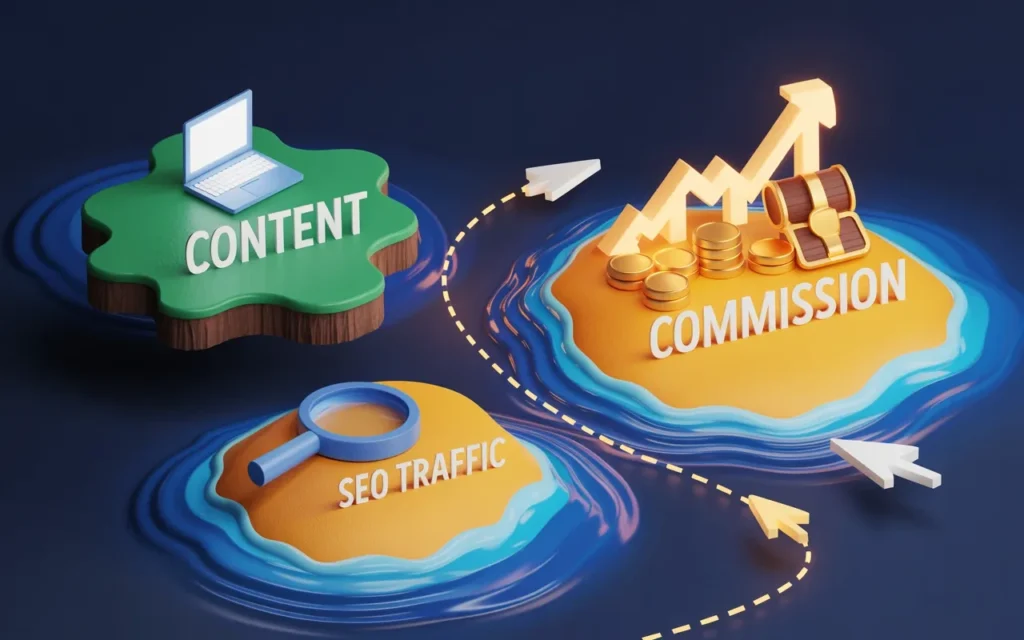
Content is king, but strategy is the kingdom.
SEO comparison articles targeting buyer intent
People searching “Bluehost vs HostGator” or “best VPS hosting 2026” are ready to buy. These comparison articles convert exceptionally well because they match high-intent search queries.
Create detailed, honest comparisons. Highlight pros and cons. Don’t just hype the program with the highest commission.
Tutorials and migration guides that convert readers
Step-by-step guides like “How to Migrate Your WordPress Site to VPS” or what reseller hosting includes attract readers who are actively evaluating options.
Educational content builds trust, and trust converts.
YouTube and educational content funnels
Video tutorials on setting up hosting, configuring DNS, or installing WordPress reach audiences who prefer visual learning. A single YouTube video can generate referrals for years.
Email marketing for repeat conversions
If you have an email list, you can promote hosting during product launches, Black Friday sales, or when a reader asks a relevant question.
Email allows you to nurture relationships and recommend services at the right time.
Localized hosting recommendations for specific markets
Some audiences need hosting with data centers in specific regions. If you serve a UK audience, recommend providers with UK servers. If you target SaaS founders, focus on high-performance infrastructure.
Tailoring your recommendations increases relevance and conversion rates.
Why Do Some Affiliates Fail in the Hosting Niche?
Not everyone succeeds. Here’s why some affiliates struggle.
Promoting based only on commission size
Chasing the highest payout without considering product quality is a recipe for failure. Your audience will notice if the service is slow, unreliable, or overpriced.
Reputation matters more than a single commission.
Ignoring audience-specific hosting needs
Promoting enterprise dedicated servers to hobby bloggers makes no sense. Match the product to the audience’s actual needs.
If your readers are beginners, recommend affordable shared hosting. If they’re agencies, promote reseller programs.
Lack of technical credibility in content
Hosting is technical. If your content is superficial or inaccurate, readers won’t trust your recommendations.
Show that you understand the topic. Reference real features, performance benchmarks, and use cases.
Not tracking performance metrics properly
If you don’t know which articles, keywords, or traffic sources generate conversions, you can’t optimize. Use analytics to identify what works and double down on it.
How Do You Choose the Right Hosting Affiliate Partner for Long-Term Success?
This is the decision that defines your affiliate business.
Infrastructure quality affects your reputation
Your referrals reflect on you. If you recommend a provider that experiences constant downtime or slow performance, your audience loses trust.
Choose programs backed by solid infrastructure. Look for providers using modern hardware like NVMe storage and offering multiple data center locations.
Reliable uptime improves referral retention
Hosting customers don’t cancel because of price—they cancel because of downtime. A provider with consistent uptime keeps your referrals active longer, which protects your recurring income.
Scalable services help your audience grow
Your audience’s needs will evolve. They might start with shared hosting but eventually need VPS or dedicated servers. Partner with providers that offer upgrade paths.
This keeps your referrals within the same ecosystem, and you continue earning commissions as they scale.
Transparent pricing builds audience trust
Hidden fees and renewal price hikes destroy trust. Promote providers with clear, honest pricing structures.
When your audience feels confident they’re getting fair value, they’re more likely to act on your recommendation.
Why Is Skynethosting.net a Smart Choice for Hosting Affiliates?
After years in this space, I’ve learned to evaluate programs on performance, not promises.
Competitive affiliate commissions with strong conversion potential
Skynethosting.net offers tiered commissions that scale with your referral volume—up to $125 per signup. This rewards affiliates who bring consistent traffic and referrals.
But what matters more is that their services actually convert. The pricing is competitive, the infrastructure is reliable, and the target audience (agencies, developers, SaaS founders) has high lifetime value. You can explore their step-by-step affiliate guide to see how easy it is to get started.
Reliable VPS and hosting infrastructure suitable for modern workloads
They use NVMe storage, which is significantly faster than standard SSDs. This matters because your referrals will notice the performance, and satisfied customers stick around.
They also offer 25+ global data center locations, which means you can recommend hosting that’s geographically close to your audience’s users—reducing latency and improving site speed.
Ideal for agencies, developers, and SaaS founders you refer
If your audience includes web designers, developers, or SaaS founders, Skynethosting.net’s VPS and reseller plans are a natural fit. These customers need performance, scalability, and control—all things this provider emphasizes.
Consistent performance helps affiliates retain trust and generate repeat revenue
Here’s the reality: you can only promote a service if it works. Poor infrastructure leads to cancellations, which kills your recurring income.
Skynethosting.net’s focus on uptime, support, and scalable resources means your referrals are more likely to stay active. That protects your long-term revenue stream.
Conclusion
Web hosting affiliate programs remain one of the most sustainable digital income models in 2026
Hosting isn’t a trend—it’s a necessity. As long as businesses need websites and applications need infrastructure, there will be demand for reliable hosting.
For affiliates, that demand translates into consistent referral opportunities and recurring income potential.
Success depends on promoting reliable infrastructure — not just chasing commissions
The programs with the highest payouts aren’t always the ones that perform best. Conversion rate, customer retention, and infrastructure quality matter more than commission size alone.
Choose programs that align with your audience’s needs and reputation you want to protect.
Partnering with a performance-focused provider like Skynethosting.net allows affiliates to recommend services confidently while building recurring revenue streams
After testing dozens of programs, I’ve learned that the best affiliate relationships are built on trust—both with the provider and with your audience.
Skynethosting.net’s combination of solid infrastructure, competitive commissions, and affiliate-friendly tools makes it a strong partner for anyone serious about building income in this niche.
If you’re ready to start, explore their affiliate program and see how it fits your audience. The opportunity is there—you just have to take the first step.
FAQs
Why are web hosting affiliate programs profitable in 2026?
Hosting is recurring necessity for all online businesses/SaaS; high LTV from sticky customers who rarely migrate. Digital growth ensures demand; affiliates earn monthly as referrals renew, compounding income unlike one-off products.
How do hosting affiliate commissions work?
Unique links track referrals via cookies (30-120 days); earn one-time ($50-200) or recurring (10% monthly). Skynethosting.net uses clean domain-based tracking, tiered up to $125/signup scaling with volume for reliable payouts.
What hosting types convert best for affiliates?
Shared for bloggers/small biz, VPS for developers/growing sites, reseller for agencies/freelancers, dedicated/cloud for enterprises. Match to audience: reseller has high LTV from multiple client accounts under one referral.
What makes a strong hosting affiliate program?
Competitive commissions with good conversion, long cookies, transparent tracking, brand trust, marketing tools. Responsive support, reliable infrastructure prevent cancellations harming your recurring revenue and reputation.
How to market hosting affiliates effectively?
Create SEO comparisons (“best VPS 2026”), tutorials, YouTube guides targeting buyer intent. Use email for nurturing; localize for regions; track performance to optimize high-converting content like agency reseller promotions.
Why promote Skynethosting.net’s affiliate program?
Tiered commissions to $125, NVMe/global DCs ensure performance referrals stick, ideal for agencies/devs/SaaS. Affiliate-friendly tools, direct links boost CTR; solid infrastructure protects trust for long-term passive income.