
Green Web Hosting: How Sustainable Hosting Powers Modern Websites
TL;DR
- Data centers consumed 415 TWh in 2024 (1.5% global electricity), projected to double by 2030 due to constant server operation.
- Green hosting powers sites with renewables like solar/wind, carbon offsets, RECs, and efficient NVMe SSD/LiteSpeed hardware.
- It matches or exceeds traditional performance via modern infrastructure, reducing energy waste by up to 40%.
- Seek verified renewables, transparent practices, and features like efficient cooling/virtualization to avoid greenwashing.
- Ideal for sustainable brands, agencies, resellers; offers brand trust, compliance, and cost savings long-term.
- SkyNetHosting provides NVMe SSD, LiteSpeed, 25 data centers, free WHMCS for efficient, scalable green reseller hosting.
I’ll never forget the moment I realized the internet had a carbon footprint.
It was 2015. I was sitting in a data center for the first time, watching rows of servers hum at full capacity. The air conditioning was blasting to keep everything cool. The electricity meter was spinning like crazy.
And I thought: “These machines never stop. They run 24/7, 365 days a year.”
That’s when it hit me. Every website you visit, every email you send, every video you stream—all of it lives on physical servers that consume massive amounts of energy.
Fast forward to today, and the numbers are staggering. According to the International Energy Agency, data centers consumed approximately 415 terawatt-hours (TWh) of electricity in 2024—roughly 1.5% of global electricity usage. By 2030, that figure is projected to more than double to around 945 TWh.
The internet is growing. And so is its environmental impact.
But here’s the good news: you don’t have to choose between a fast website and a sustainable one. Green web hosting makes it possible to power your online presence with renewable energy, efficient infrastructure, and responsible practices.
In this guide, I’ll break down everything you need to know about eco-friendly hosting. We’ll talk about how it works, whether it affects performance, and how to choose a provider that actually walks the talk.
Let’s dive in.
What Is Green Web Hosting?
Green web hosting means powering websites with renewable energy or offsetting carbon emissions to minimize environmental impact.
Definition of eco-friendly hosting
At its core, green hosting is any web hosting service that takes active steps to reduce its carbon footprint.
This can mean:
- Running data centers on renewable energy like solar, wind, or hydroelectric power
- Purchasing carbon offsets or Renewable Energy Certificates (RECs)
- Using energy-efficient hardware and cooling systems
- Implementing sustainable practices like server virtualization
The goal is simple: keep websites online without contributing to climate change.
Why traditional hosting consumes high energy
Traditional hosting relies on massive data centers filled with thousands of servers. These servers run constantly, generating heat. That heat requires powerful cooling systems, which consume even more electricity.
In most regions, that electricity still comes from fossil fuels—coal, natural gas, or oil. This means every time someone visits your website, there’s a small carbon cost associated with loading those pages.
Multiply that across billions of websites, and the impact adds up fast.
How sustainability applies to web infrastructure
Sustainability in hosting isn’t just about energy sources. It’s about efficiency.
Modern green hosting providers optimize every layer:
- Hardware: Using newer, more efficient processors and solid-state drives (SSDs)
- Software: Running lightweight operating systems and optimized web servers
- Architecture: Consolidating workloads through virtualization
- Cooling: Implementing smart cooling systems that adjust based on real-time needs
All of this reduces waste while maintaining—or even improving—performance.
Why Does Web Hosting Have an Environmental Impact?
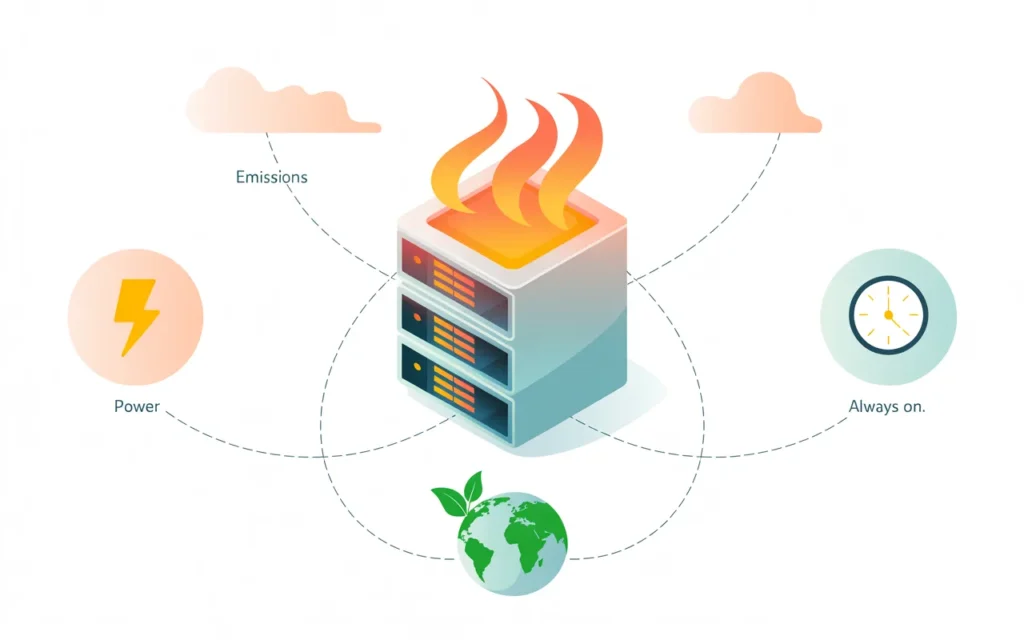
If you’ve never thought about where your website “lives,” you’re not alone. Most people don’t realize the physical infrastructure behind their online presence.
Energy usage of global data centers
Data centers are the backbone of the internet. They house the servers that store your website files, process requests, and deliver content to visitors around the world.
But they’re power-hungry. According to industry research, data centers account for a substantial share of electricity consumption globally, with projections showing continued growth as digital services expand.
That’s equivalent to the total electricity use of entire countries.
And it’s not just big tech companies. Small business websites, personal blogs, e-commerce stores—they all live on servers that need power.
Carbon emissions from always-on servers
Unlike your laptop or phone, servers don’t sleep. They run continuously to ensure websites are always accessible.
This constant operation means constant energy consumption. If that energy comes from fossil fuels, it generates carbon emissions.
A single website might not produce much carbon. But when you consider millions of websites running 24/7, the cumulative effect is significant.
The hidden footprint of growing websites
As your website grows, so does its energy consumption.
More traffic means more server requests. More content means more storage. More features mean more processing power.
Many website owners focus on growing their audience without realizing they’re also growing their carbon footprint. This is where choosing the right hosting provider makes a real difference.
How Does Green Hosting Actually Work?
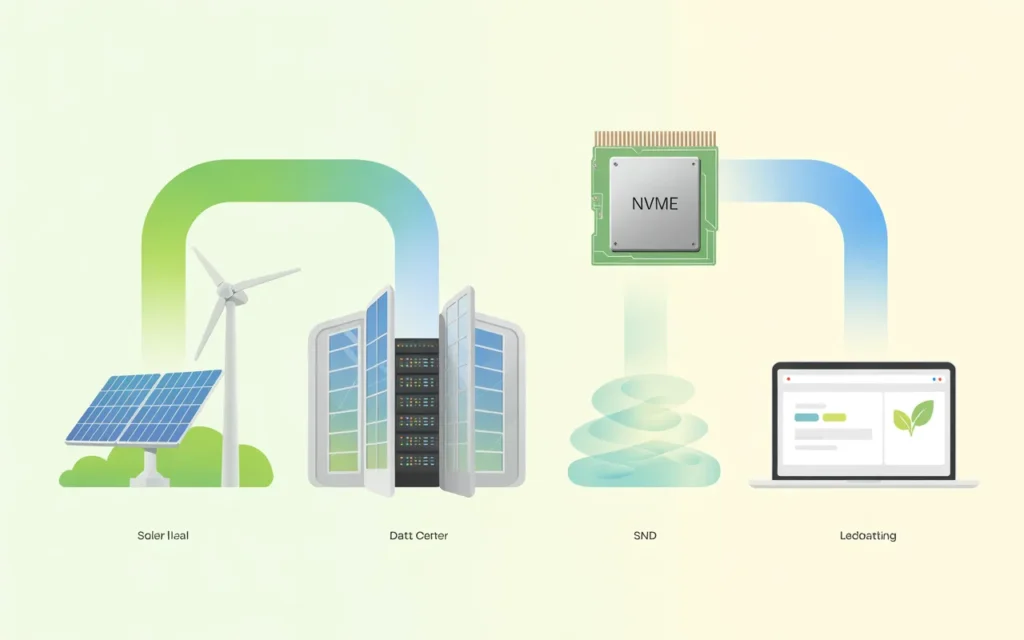
Not all “green” hosting is created equal. Some providers truly invest in sustainability. Others just slap an eco-friendly label on their marketing.
Renewable energy powered data centers
The gold standard for green hosting is data centers that run entirely on renewable energy.
This means solar panels, wind turbines, or hydroelectric power physically supply the electricity that keeps servers running.
Some providers own their renewable infrastructure. Others partner with local utility companies to source clean energy. Either way, the result is the same: zero emissions from electricity use.
Carbon offset programs and RECs
If a hosting company can’t run on 100% renewable energy, they might purchase carbon offsets.
Carbon offsets fund projects that reduce emissions elsewhere—like reforestation, renewable energy development, or methane capture. The idea is to balance out the carbon produced by their operations.
Renewable Energy Certificates (RECs) work similarly. For every unit of electricity consumed, the company purchases a certificate proving that an equivalent amount of renewable energy was generated somewhere on the grid.
These aren’t as effective as direct renewable energy use, but they’re better than doing nothing.
Energy-efficient hardware and cooling systems
Green hosting isn’t just about energy sources. It’s also about using less energy in the first place.
Modern providers invest in:
- NVMe SSD storage: Faster and more efficient than traditional hard drives
- Efficient processors: Newer CPUs that deliver more performance per watt
- Smart cooling: Systems that use outside air when possible and adjust cooling based on actual server temperatures
- Server consolidation: Virtualization technology that runs multiple virtual servers on one physical machine, reducing waste
I’ve seen data centers reduce energy consumption by 40% just by upgrading to more efficient hardware. That’s a huge win for both the environment and the bottom line.
Does Green Web Hosting Affect Website Performance?
This is the question I hear most often: “Will my site be slower if I choose green hosting?”
The answer might surprise you.
Speed and uptime considerations
Green hosting doesn’t mean sacrificing performance. In fact, many eco-friendly providers offer better speed and uptime than traditional hosts.
Why? Because sustainability and efficiency go hand in hand.
Energy-efficient servers often use newer, faster technology. Optimized cooling systems reduce hardware failures. Better infrastructure management improves reliability.
At SkyNetHosting.net, for example, we’ve optimized our infrastructure for both performance and efficiency. Our NVMe SSD storage is significantly faster than traditional drives, and our LiteSpeed web servers handle traffic spikes better than older Apache systems.
This means your visitors get faster load times, and you get better uptime—all while reducing environmental impact.
Modern infrastructure vs legacy systems
Here’s a dirty secret about traditional hosting: many providers run on outdated equipment because replacing it is expensive.
Old servers are inefficient. They consume more power, generate more heat, and deliver slower performance.
Green hosting providers tend to invest in modern infrastructure because efficiency is part of their value proposition. This creates a win-win situation where sustainability and performance both improve.
Why sustainability can improve efficiency
When you design systems with efficiency in mind from the start, you eliminate waste.
Think about it: a data center that optimizes energy use also optimizes resource allocation. They’re not overcrowding servers. They’re not running unnecessary processes. They’re not wasting cycles on bloated software.
This lean approach translates directly to better website performance. Your site loads faster because it’s running on infrastructure that’s engineered for efficiency, not just packed as tightly as possible to maximize short-term profit.
What Features Should You Look for in a Green Hosting Provider?
Not all “green” hosting is equally green. Here’s how to separate genuine sustainability from greenwashing.
Verified renewable energy sourcing
Look for providers that can prove their renewable energy claims.
Ask questions like:
- Do you own renewable energy infrastructure?
- Do you have direct power purchase agreements with renewable energy suppliers?
- Are you certified by third-party organizations?
Certifications from organizations like the Green Power Partnership or similar programs add credibility. Vague marketing statements like “we care about the environment” don’t.
Efficient server technology and SSD storage
Check what hardware the provider uses.
Modern features to look for:
- NVMe SSD storage: Much faster and more energy-efficient than traditional hard drives
- LiteSpeed or similar optimized web servers: Handle more traffic with less resource use
- CloudLinux or similar isolation: Prevents resource waste from account overcrowding
- Server virtualization: Maximizes hardware utilization
At SkyNetHosting.net, we implement these technologies not just because they’re eco-friendly, but because they deliver measurably better performance for our customers. The environmental benefits are a bonus that aligns with responsible business practices.
Transparent sustainability practices
Transparency matters. If a hosting provider is truly committed to sustainability, they’ll openly share:
- Energy sources and consumption data
- Carbon offset or REC purchases
- Infrastructure efficiency improvements
- Long-term sustainability goals
Be skeptical of providers who make bold green claims but offer no details about how they actually achieve them.
Is Green Hosting More Expensive Than Traditional Hosting?
This is where myths and reality diverge.
Cost myths vs real pricing trends
Many people assume green hosting costs significantly more. This used to be true, but not anymore.
As renewable energy has become more affordable, the cost gap has shrunk. In some cases, green hosting is actually cheaper because efficient infrastructure reduces operational costs.
I’ve seen resellers switch to more efficient infrastructure and actually lower their costs while improving their environmental profile. The efficiency savings offset any premium for renewable energy.
Long-term operational efficiency benefits
Here’s something traditional hosting companies don’t advertise: inefficient infrastructure costs more to operate over time.
Old servers break down more often. High energy use means higher electricity bills. Overcrowded servers require frequent upgrades.
Green hosting providers that invest in efficient infrastructure avoid these escalating costs. They pass some of those savings on to customers through competitive pricing.
Value beyond just environmental impact
Green hosting offers benefits beyond feeling good about your carbon footprint.
- Better performance: Modern, efficient hardware delivers faster load times
- Higher reliability: Well-maintained infrastructure means better uptime
- Brand alignment: Show customers you care about sustainability
- Future-proofing: As environmental regulations tighten, you’re already compliant
For businesses, these factors add up to real value that justifies any minor price difference.
Who Should Choose Eco-Friendly Hosting?
Green hosting isn’t just for environmental activists. It makes sense for a wide range of users.
Sustainable brands and startups
If your business promotes sustainability, using green hosting is a no-brainer.
Your customers expect consistency. If you sell eco-friendly products but host your site on fossil fuel-powered servers, that’s a contradiction.
Many startups build their entire brand identity around environmental responsibility. Green hosting is a simple way to walk the talk from day one.
Agencies managing multiple client websites
Digital agencies often host dozens or hundreds of client sites. That cumulative carbon footprint adds up.
By choosing green hosting, agencies can:
- Offer sustainability as a service differentiator
- Help clients meet their own environmental goals
- Reduce total carbon impact across their entire portfolio
I know agencies that have won new business specifically because they could demonstrate their commitment to sustainable infrastructure. In competitive markets, that edge matters.
Resellers building environmentally responsible services
If you’re running a reseller hosting business, choosing a green infrastructure partner helps you serve eco-conscious clients.
As the future of web hosting continues to evolve, sustainability is becoming a standard expectation, not a niche preference. Resellers who get ahead of this trend position themselves for long-term growth.
Many resellers are also discovering that white-label reseller hosting on efficient infrastructure helps them build a strong, differentiated brand while keeping operational costs manageable.
How Can Resellers Benefit from Green Hosting Solutions?
Speaking of resellers, let’s talk about the specific advantages of choosing sustainable infrastructure.
Attracting eco-conscious customers
There’s a growing market segment that actively seeks out green hosting.
These customers will specifically search for terms like “eco-friendly hosting” or “green web hosting” when shopping for services. If you can authentically offer sustainable hosting, you tap into this audience.
Even customers who don’t prioritize sustainability will view it as a positive differentiator when comparing providers. All else being equal, many people prefer to support businesses that care about environmental impact.
Differentiating in a competitive hosting market
The hosting market is crowded. Hundreds of resellers compete on price, features, and support.
Sustainability offers a way to stand out that doesn’t require racing to the bottom on pricing.
When you can say, “Our infrastructure is powered by renewable energy,” you’re offering something competitors can’t easily match without significant investment. That’s a real competitive advantage.
Building a future-ready hosting business
Environmental regulations are tightening globally. Carbon taxes and emissions reporting requirements are becoming more common.
By choosing green hosting now, you’re ahead of the curve. You won’t have to scramble to meet new requirements or face penalties down the road.
This forward-thinking approach also appeals to investors and partners who care about long-term business sustainability, not just quarterly profits.
What Are the Business Advantages of Sustainable Infrastructure?
Beyond the environmental benefits, green hosting delivers tangible business value.
Stronger brand trust and credibility
Consumers are increasingly skeptical of corporate greenwashing. They want to support businesses that genuinely care about more than just profit.
By choosing verifiable green hosting, you demonstrate values alignment. This builds trust with customers who care about sustainability and strengthens your overall brand reputation.
I’ve seen small businesses attract media coverage and organic publicity simply because they could tell a compelling story about their commitment to sustainable operations—including their choice of hosting provider.
Compliance with global sustainability trends
More companies are being asked to report their carbon footprint. Investors want ESG (Environmental, Social, and Governance) data. Government contracts increasingly require sustainability commitments.
If your website infrastructure is already green, you’re prepared for these requests. You can accurately report lower emissions and demonstrate concrete environmental actions.
This compliance isn’t just about checking boxes—it opens doors to opportunities that wouldn’t be available otherwise.
Future-proofing against energy regulations
Energy costs are rising. Carbon taxes are expanding. Emissions regulations are getting stricter.
Traditional hosting providers will face increasing costs to comply with these changes. Some will absorb the costs (reducing profit margins). Others will pass them on to customers (raising prices).
Green hosting providers are already compliant. They’ve made the investments. They won’t face sudden price increases or forced infrastructure migrations.
By choosing green hosting now, you protect yourself from future disruptions and cost volatility.
How Is SkyNetHosting.Net Inc. Supporting Reliable and Responsible Hosting?
At SkyNetHosting.net, we’ve spent over 20 years building infrastructure that delivers both performance and efficiency.
High-performance infrastructure designed for efficiency
We don’t believe you should have to choose between speed and sustainability. That’s why we’ve invested in modern hardware that excels at both.
Our NVMe SSD storage is dramatically faster than traditional drives—up to 900% faster in some benchmarks. This speed improvement also means more efficient resource use, as operations complete faster and servers spend less time processing requests.
We use LiteSpeed web servers and CloudLinux operating systems, which handle traffic more efficiently than older alternatives. This means your websites load faster for visitors while consuming fewer server resources.
Scalable hosting solutions without wasteful resource use
Efficiency isn’t just about hardware—it’s about smart resource allocation.
We offer flexible reseller hosting plans that scale with your business. You don’t pay for resources you’re not using, and you can upgrade seamlessly when you need more capacity.
This eliminates the waste that comes from over-provisioning (paying for unused resources) or under-provisioning (suffering performance issues that waste energy through inefficiency).
Our infrastructure includes features like automated scaling and resource monitoring to ensure every watt of energy delivers maximum value.
Supporting agencies and resellers with sustainable growth
We work with hundreds of resellers and agencies who manage hosting for their clients. Many of them care deeply about sustainability and want infrastructure partners who share those values.
That’s why we provide tools like free WHMCS licenses, automated migration support, and 24/7 expert assistance to help resellers build successful businesses without unnecessary resource waste.
When you’re migrating reseller hosting to more efficient infrastructure, we handle the technical complexities so you can focus on serving your clients.
Our global network across 25 locations also means we can serve users efficiently no matter where they’re located, reducing network latency and the energy wasted by unnecessarily long data transfers.
How Can You Transition to Green Web Hosting Smoothly?
Switching hosting providers can feel daunting. But with proper planning, the transition can be seamless.
Migrating without downtime
The biggest fear when switching hosts is downtime. Your site going offline means lost visitors, lost sales, and frustrated users.
The key is to migrate during a low-traffic period and use proper DNS management techniques.
Modern hosting providers (including SkyNetHosting.net) offer migration assistance. They’ll handle the technical details of transferring your files, databases, and email accounts without interrupting service.
Understanding DNS propagation and how nameservers work helps ensure a smooth transition. Proper planning means your visitors never notice the switch happening behind the scenes.
Evaluating infrastructure before switching
Not all green hosting is equally reliable. Before you commit, ask questions:
- What’s the uptime guarantee?
- How fast is the server response time?
- What backup systems are in place?
- How quickly does support respond to issues?
Look for providers with proven track records. Check reviews from actual customers, not just marketing claims.
At SkyNetHosting.net, we’re confident enough in our infrastructure to offer transparent performance data and money-back guarantees. That confidence comes from decades of experience building reliable systems.
Choosing scalable plans that minimize resource waste
Start with a plan that matches your current needs, but ensure it can grow with you.
If you’re a reseller or agency, consider plans that offer easy upgrades without forced migrations. This prevents the waste that comes from constantly moving accounts between different infrastructure levels.
Look for features like:
- Easy account provisioning and management
- Automated resource monitoring
- Flexible upgrade paths
- Clear pricing without hidden fees
The right plan reduces both financial waste and environmental waste by ensuring you’re only using the resources you actually need.
Sustainability and performance can go hand in hand
After a decade in the hosting industry, I’ve learned that green hosting isn’t a compromise—it’s an evolution.
The same technologies that reduce energy consumption also improve website performance. Efficient infrastructure is faster infrastructure. Sustainable practices lead to more reliable operations.
You don’t have to choose between running a fast website and being environmentally responsible. Modern hosting technology delivers both.
Choosing hosting that supports both business growth and environmental responsibility
The hosting providers thriving in 2026 and beyond are those that understand sustainability isn’t just marketing—it’s smart business.
Efficient infrastructure costs less to operate. Renewable energy sources are becoming cheaper than fossil fuels. Customers increasingly prefer to work with responsible companies.
Whether you’re launching your first website, building a hosting business, or managing sites for dozens of clients, choosing green hosting positions you for sustainable success.
Building faster, smarter, and more sustainable websites for the future
The internet isn’t going away. If anything, our reliance on digital infrastructure will only increase.
The question isn’t whether websites need hosting—it’s what kind of hosting we choose to support them with.
By choosing green hosting, you’re voting with your wallet for a more sustainable internet. You’re supporting providers who invest in renewable energy and efficient technology. You’re helping reduce the carbon footprint of the digital economy.
And you’re doing all of this without sacrificing the speed, reliability, or features your website needs to succeed.
If you’re ready to make the switch to high-performance, responsibly managed hosting infrastructure, explore SkyNetHosting.net’s reseller and hosting solutions. We’re here to help you build a faster, more sustainable online presence.
FAQs
What is green web hosting?
Green web hosting powers websites using renewable energy sources like solar or wind, carbon offsets, RECs, and efficient hardware such as NVMe SSDs. It reduces environmental impact while maintaining high performance through optimized cooling and virtualization.
Why does hosting impact the environment?
Servers run 24/7, consuming massive electricity—data centers used 415 TWh in 2024 (1.5% global total), mostly from fossil fuels. Cooling systems add more energy needs, creating significant carbon emissions across billions of sites.
Does green hosting slow websites?
No, it often improves speed with modern NVMe SSDs (900% faster), LiteSpeed servers, and efficient processors that use less power per task. Optimized infrastructure boosts uptime and load times over outdated traditional systems.
How to spot real green providers?
Verify renewable sourcing via certifications, direct energy agreements, or REC proofs; check for NVMe SSD, LiteSpeed, smart cooling, and transparent reports. Avoid vague claims—demand data on energy use and efficiency gains.
Is green hosting costlier?
Not significantly—renewables are cheaper now, efficient hardware cuts ops costs passed to users. Long-term savings from lower energy bills, better uptime, and no future carbon taxes make it competitive or better value.
Who benefits most from green hosting?
Sustainable brands align values, agencies/resellers attract eco-clients and differentiate, startups future-proof operations. It builds trust, ensures ESG compliance, and supports scalable growth without performance trade-offs.