
Reseller Hosting vs Master Reseller Hosting: Key Differences
Quick answer: Reseller hosting lets you create cPanel accounts and sell web hosting directly to clients. Master reseller hosting goes one step further—it lets you create other reseller accounts, so you can sell hosting to people who then sell it to their own clients. Reseller hosting suits beginners and agencies, while master reseller hosting fits entrepreneurs building a multi-tier hosting business.
I started my first hosting business over ten years ago. I remember staring at two pricing tables, completely confused. One said “reseller hosting.” The other said “master reseller hosting.” I had no clue which one I needed.
If you feel that same confusion right now, you are in the right place.
In this guide, I will walk you through both models in plain English. We will look at how each one works, who it suits, and what risks to watch out for. By the end, you will know exactly which option fits your goals—and you will avoid wasting money on the wrong plan.
Let us dig in.
What Is Reseller Hosting?
Basic definition
Reseller hosting is the most common way people start a hosting business. You buy a big chunk of server space from a provider. Then you split it into smaller hosting packages and sell them to your own clients.
It is simple, cheap, and beginner-friendly.
How reseller hosting works
Think of it like renting an apartment building. You lease the whole building from the owner. Then you rent out individual units to tenants.
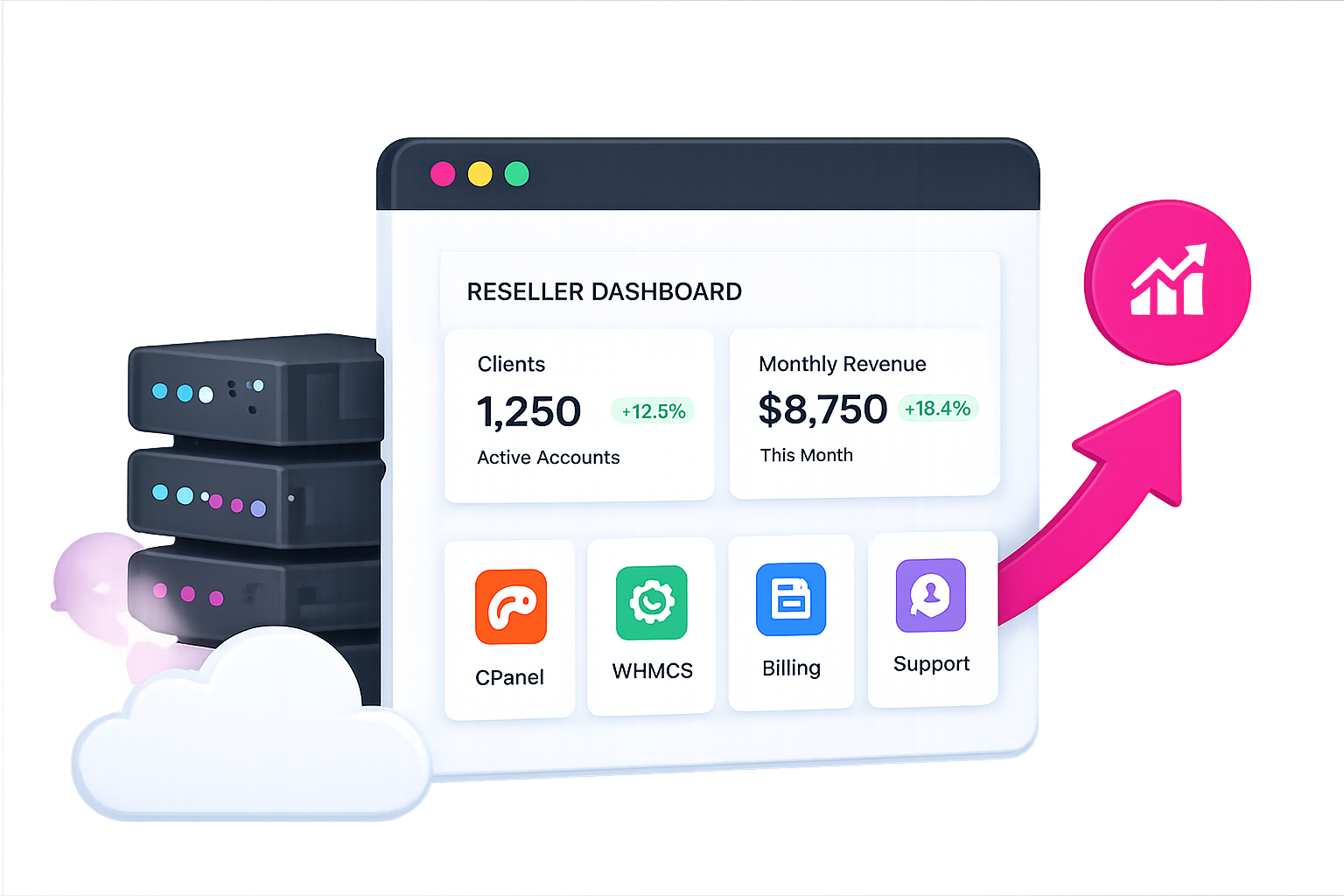
With reseller hosting, you get a tool called Web Host Manager (WHM). From WHM, you create individual cPanel accounts for your clients. Each client logs into their own cPanel to build their site, set up email, and manage files.
Your clients never see your provider. They only see your brand. If you want a deeper look at the two tools involved, read this guide on WHM vs cPanel.
Who typically uses reseller hosting
Reseller hosting is perfect for web designers, developers, and small agencies.
Say you build websites for local businesses. Instead of sending clients off to another host, you keep them on your own server and charge a monthly fee. That creates steady, recurring income.
It is one of the smartest ways to grow an agency. For a full breakdown, check out this checklist on reseller hosting for WordPress agencies.
What Is Master Reseller Hosting?
Definition and structure
Master reseller hosting takes the standard model and adds a powerful new layer.
With a standard reseller account, you can only create cPanel accounts for website owners. With a master reseller account, you can also create WHM reseller accounts for other people.
In short, you become a hosting provider for other hosting providers.
How master reseller hosting expands reseller capabilities
This is where things get interesting. A master reseller can sell two products at once.
You can sell regular web hosting to website owners. And you can sell reseller plans to people who want to start their own hosting business.
That means a bigger product catalog and more ways to earn.
The role of sub-resellers
When you sell a reseller plan, that buyer becomes your sub-reseller. They get their own WHM and create cPanel accounts for their clients.
You sit above them, providing the resources. They handle their customers. You handle them.
Managing this chain takes real effort. If you plan to go this route, this guide on recruiting and managing sub-resellers is worth a read.
Reseller Hosting vs Master Reseller Hosting: Quick Comparison
Account creation capabilities
Here is the core difference in one line:
- Reseller hosting: create cPanel accounts only.
- Master reseller hosting: create cPanel accounts and WHM reseller accounts.
That single feature changes everything about how you run your business.
Revenue opportunities
A standard reseller earns from one group: website owners.
A master reseller earns from two groups: website owners and sub-resellers. Reseller plans usually cost more per month, so your earning potential is higher.
Management responsibilities
More power means more work. A standard reseller only supports website owners.
A master reseller supports sub-resellers, who each have their own clients. So your support load grows much faster.
Understanding the Hosting Hierarchy
It helps to picture hosting as a ladder. Each rung sits on top of the one below.
Hosting provider
At the very top sits the hosting provider. They own the servers and the infrastructure. This is your upstream source. If you want to understand this layer better, read this explainer on what upstream hosting is.
Master reseller
Next comes the master reseller. They buy a large pool of resources from the provider and split it into reseller accounts.
Reseller
Below the master reseller sits the standard reseller. They buy a reseller plan and create cPanel accounts for their clients.
End customer
At the bottom is the end customer. This is the person who actually hosts a website. They pay the reseller and never see the layers above.
In a standard setup, you skip the master reseller tier. You sell directly to end customers.
Key Differences Between Reseller and Master Reseller Hosting
Ability to create reseller accounts
This is the headline difference. Only master reseller hosting lets you create WHM reseller accounts. Standard reseller hosting cannot.
Business scalability
Standard reseller hosting scales well for an agency. But you are limited to selling hosting one account at a time.
Master reseller hosting scales faster. Each sub-reseller brings their own group of clients, so your reach multiplies.
Administrative control
Both models give you control over your accounts. You can suspend, upgrade, and manage usage limits.
Master resellers manage a bigger pool, though. You need to watch resources across many accounts at once. Tools like CloudLinux LVE limits help keep one heavy user from slowing everyone down.
Revenue potential
Standard reseller hosting builds steady income from direct clients.
Master reseller hosting adds a second income layer. Sub-resellers pay higher fees and tend to stay longer, because moving hundreds of clients is hard. That makes the revenue stickier.
Advantages of Standard Reseller Hosting
Lower cost of entry
Standard reseller plans are cheap. You can launch a real hosting business with very little money upfront.
Simpler management
You only deal with website owners. No sub-resellers, no second tier. That keeps your day-to-day simple.
Faster setup for beginners
The learning curve is gentle. You learn how to handle billing, support, and server basics without feeling buried. To automate the boring parts, learn what WHMCS is and how it runs your billing for you.
Advantages of Master Reseller Hosting
Multiple revenue layers
You earn from website owners and sub-resellers at the same time. Two income streams instead of one.
Greater business expansion opportunities
You can market “Start Your Own Hosting Business” packages right next to regular hosting plans. That opens a whole new customer base.
More flexible hosting structures
You can build a layered business that grows on its own. As your sub-resellers grow, you grow with them. For the full strategy, read this guide on how to sell hosting under your brand.
Which Option Is Best for Freelancers and Agencies?
Ideal scenarios for reseller hosting
If you build sites for clients, standard reseller hosting is a perfect match. You keep clients on your server and earn recurring fees.
Client management considerations
Freelancers and agencies usually want simple management. You want to focus on building websites, not running a server farm. Standard reseller hosting keeps things light.
Growth expectations
Most agencies grow steadily, not explosively. Standard reseller hosting handles that pace with ease. And when you outgrow it, upgrading is simple.
For my honest take, standard reseller hosting wins for nearly every freelancer and agency. Start here.
Which Option Is Best for Hosting Entrepreneurs?
Building a reseller network
If your goal is a hosting company, not just an agency, master reseller hosting fits better. You can build a network of resellers under your brand.
Recruiting sub-resellers
Master hosting lets you target other entrepreneurs. You sell them the tools to start their own business. That is a high-value, loyal customer.
Long-term scalability
A reseller network grows on its own momentum. Each sub-reseller adds clients you never had to find yourself. For more on protecting that growth, read about reseller hosting account limits.
Common Misconceptions About Master Reseller Hosting
More features do not always mean more profit
Many beginners assume master reseller hosting equals more money. Not true.
More features only help if you can sell and support them. If you have no sub-resellers, those extra features just sit unused while you pay more.
The importance of support and infrastructure
Your whole business depends on your provider. If their servers go down, every layer below you goes down too.
So pick a provider with solid uptime and a strong service agreement. Read what a real reseller hosting SLA should include before you commit.
Why business strategy matters more than hosting tier
Here is the truth after ten years in this game: your strategy beats your hosting tier every time.
A focused standard reseller will outearn a confused master reseller. Pick the plan that matches your plan—not the one with the longest feature list.
How Does SkyNetHosting.Net Inc. Support Both Reseller and Master Reseller Hosting?
Scalable hosting plans
SkyNetHosting.net offers both standard and master reseller plans. You start small and grow at your own pace, with NVMe SSD storage for fast load times and CageFS protection to keep accounts isolated and safe.
White-label infrastructure
Your clients see your brand, not ours. SkyNetHosting.net includes free WHMCS licenses on many plans, so you can automate billing, support, and account setup from day one. New to the platform? This complete WHMCS guide explains how it all fits together.
Upgrade paths as businesses grow
This is the part I love most. You can start with a cheap standard plan today. When your business takes off, you upgrade to a master plan without migrating your data. The path from beginner to hosting empire stays smooth.
Making the Right Choice for Your Business
So, which one should you pick? It comes down to three things: your growth plans, your management capacity, and your business model.
Reseller hosting is ideal for beginners and agencies. If you sell hosting directly to clients and want simple, low-cost management, this is your starting point. It teaches you the ropes with very little risk.
Master reseller hosting is built for businesses that want to create and manage sub-resellers. If your dream is a layered hosting company with multiple revenue streams, this tier gives you the tools to build it.
My honest advice? Start with standard reseller hosting unless you already have hosting experience and a clear plan to recruit resellers. Build a base of paying clients first. Use that income to fund your upgrade later.
Take your time. Match the plan to your goals, not your ambitions. Then build the business you actually want.
Frequently Asked Questions
What is the main difference between reseller hosting and master reseller hosting?
Reseller hosting lets you create cPanel accounts for website owners only. Master reseller hosting lets you create both cPanel accounts and WHM reseller accounts, so you can sell hosting to other resellers who then sell to their own clients.
Is master reseller hosting worth the extra cost?
It is worth it only if you plan to recruit and support sub-resellers. If you sell hosting directly to website owners, standard reseller hosting gives you better value. Pay for the extra capability only when your business model needs it.
Can I upgrade from reseller hosting to master reseller hosting later?
Yes. Many providers, including SkyNetHosting.net, let you upgrade without migrating your data. This makes standard reseller hosting a safe starting point. You can scale up once your client base and revenue grow.
Which option is best for a freelancer or small agency?
Standard reseller hosting is the better choice for most freelancers and agencies. It is cheaper, simpler to manage, and lets you host all your client sites on one server while earning recurring fees.
What are the biggest risks of master reseller hosting?
The biggest risks are overselling and resource overload. When sub-resellers oversell server space, performance can crash for everyone. You also need stronger support systems and a reliable upstream provider with a solid uptime guarantee.
Do I need technical skills to run a master reseller business?
Yes, more than you would for standard reselling. You must understand WHM, resource management, and how to support clients who run their own hosting businesses. Beginners should learn the basics with a standard plan first.
