Black October PHP Vulnerability: How Secure Reseller Hosting Stayed Online
The Black October PHP vulnerability is our name for the PHP2Shell disclosure on October 21, 2026. Two critical flaws, CVE-2026-109618 and CVE-2026-109619, let an unauthenticated attacker run code on a server. Every host running PHP had to patch at once. SkyNetHosting kept customer sites online through it, with zero downtime and zero suspended accounts.
This guide explains what broke, how the hosting industry reacted, why we handled it the way we did, and how agencies can protect themselves next time. Where we make claims about our own operations, we say so plainly. Where we state facts about the vulnerability, we link the sources.
We have hosted more than 700,000 websites over 20+ years. A crisis like this is the kind of test that experience exists for.
What Exactly Was The Black October PHP Vulnerability?
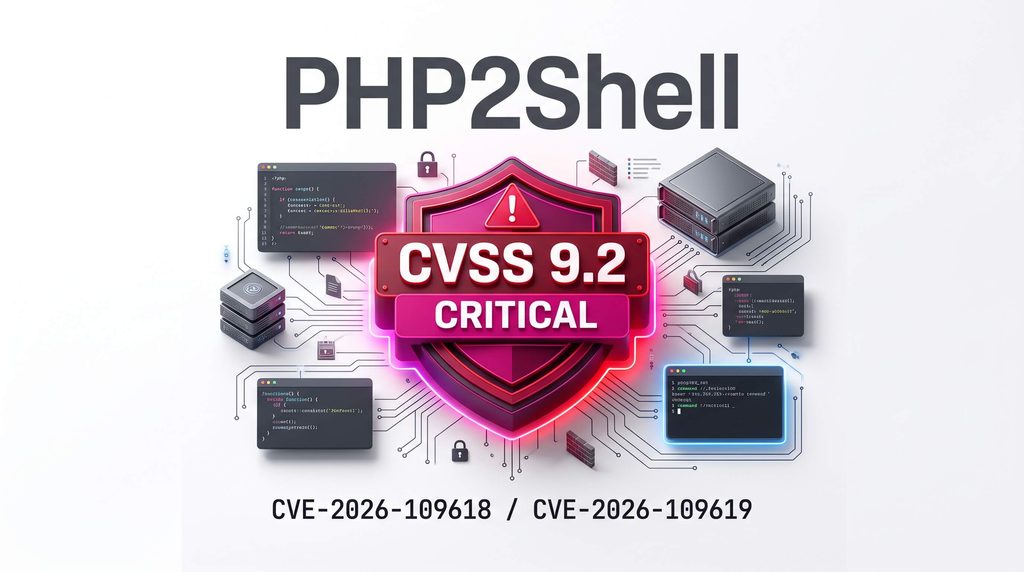
It was the public disclosure of two critical flaws in PHP itself, nicknamed PHP2Shell and tracked as CVE-2026-109618 and CVE-2026-109619. Both allow remote code execution, and researchers reported attacks in the wild. The only complete fix was installing a patched PHP release.
Understanding the PHP2Shell Exploit and CVE-2026-109618
On October 21, 2026, PHP published security advisories for both flaws and released fixed versions. Those are PHP 8.5.12, 8.4.27, 8.3.36 and 8.2.35, according to watchTowr’s analysis. Anything older on those branches was vulnerable.
CVE-2026-109618 is a memory bug. PHP can run out of memory partway through setting up a web request, which leaves its internal data half built. The cleanup code then trusts that broken data, and an attacker can steer what happens next.
CVE-2026-109619 is a related bug about stale global state. In plain words, PHP forgets to reset something between steps, and old data leaks into the wrong place. The two flaws together earned the nickname PHP2Shell, because the result is a shell on the server.
Why the nickname? An attacker’s goal is a shell, which is a command prompt on the server. With one, they can read files, change them, or install other tools. Public proof of concept code appeared online soon after disclosure, so defenders had little time.
Timing made it harder. Disclosure was originally planned for October 22 and landed a day earlier, according to a report cited by watchTowr. Hosts and panel vendors had to turn PHP’s fix into packages that servers could install, and that takes hours, not minutes.
PHP also said no configuration change fully mitigates these flaws. Turning off a feature can reduce risk, but the real fix is the update. We use the name Black October for this event and the weeks of fallout around it.
Recognizing the Danger of Unauthenticated Remote Code Execution
Each flaw scores 9.2 on the CVSS v4.0 scale, which sits in the critical range. Unauthenticated means the attacker needs no login and no account. Remote code execution means they can make your server run their own commands.
That combination is as bad as it sounds. A visitor sending a crafted request could, in a vulnerable setup, take control of the PHP process serving a website. watchTowr reported seeing exploitation in the wild soon after disclosure.
PHP says all installations serving web requests are at risk, including PHP-FPM, Apache with mod_php, and LiteSpeed. Nobody was exempt by default. WordPress, WooCommerce, Joomla, and Magento all run on PHP.
For an agency, the worry goes past one broken site. On shared servers, a compromised account can become a stepping stone to other accounts if separation is weak. Client data, search rankings, and your own reputation all sit on that line.
What does an attacker do with a shell? On a shared server, they can try to read other accounts’ files, plant spam scripts, or hide backdoors that survive a casual cleanup. None of that needs clever tricks. It needs only one unpatched server.
Business impact follows quickly. Blacklisted mail servers, search engine warnings, and clients asking why their site sends spam are all common results of a compromise. Repairing a reputation takes far longer than repairing code.
There was a second problem for sites on old software. PHP 8.1 and older receive no upstream fix, and one security firm counted roughly 884,000 internet facing hosts advertising such versions. Agencies with neglected client sites had the most to worry about.
How Did The Global Web Hosting Industry React To Black October?
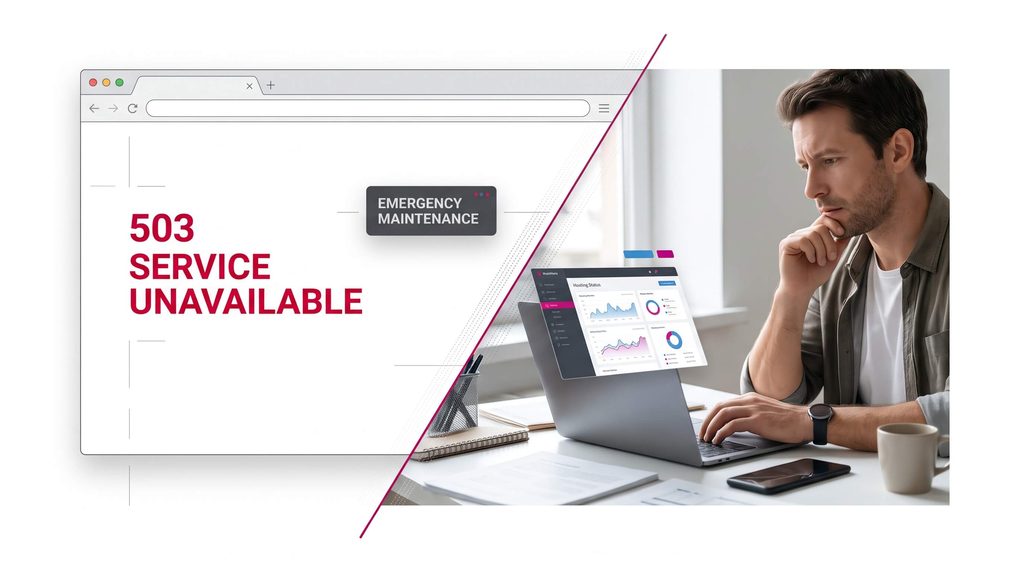
Hosting providers ran emergency maintenance, and many switched off PHP features on shared servers until fixed packages arrived. Large sites also took services offline as a precaution. Much of this was forced, because hosts could only build fixed packages after PHP published its release.
Deploying Emergency Maintenance Across Shared Hosting Servers
The reaction was swift and widespread. One industry write up put it this way: a large part of the internet went into maintenance mode on October 21. Some well known sites went offline, and hosting providers ran emergency maintenance through the night.
We want to be fair here, because fairness makes the rest of this article credible. Nobody could patch before disclosure. Control panel vendors such as cPanel and CloudLinux had to build packages after PHP shipped, and hosts depended on those packages.
So the question was never who knew about the flaw first. The question was what each host did in the hours after the fix existed. Did customers stay online? Were they told what was happening? Did anything break?
Think about what the maintenance meant for a small agency. A client calls about a dead site. You check the host’s status page and see maintenance. You can only wait and pass along the message.
That waiting is the real cost. It costs trust, because clients hired you to handle exactly this. A good host shortens the wait and keeps you informed while it lasts.
We are not naming other providers, and we are not claiming every other host failed. Many worked hard under pressure. But maintenance windows and sudden outages cost agencies real time, and agencies answer to their own clients.
Restricting Features and Access While Patches Were Pending
While waiting for packages, many hosts relied on temporary mitigations. According to the same industry report, providers switched off PHP features across shared servers until patches were ready. One provider closed admin ports on a control panel that itself ran on PHP.
Mitigations like these work by removing risk, and removing risk often removes function. A feature that is switched off cannot be attacked, but customers cannot use it either. Sites can behave strangely, and resellers get the support requests.
If your host restricted features, locked parts of your control panel, or limited access to your backups, you know how that felt. You were the one explaining it to clients who did not care about CVE numbers.
Think of it as closing windows to stop a burglar. It works, but the house gets stuffy. Hosts closed features until the real lock arrived in the form of the patched package.
The lesson for resellers is to ask in advance. What will you switch off in an emergency, who decides, and how will I be told? A provider with a clear answer has thought about it.
This is why reseller hosting is a trust business. Your clients never see your provider. They see you. When the host stumbles, the agency takes the blame.
How Did SkyNetHosting Stay Online Through The PHP Outage?
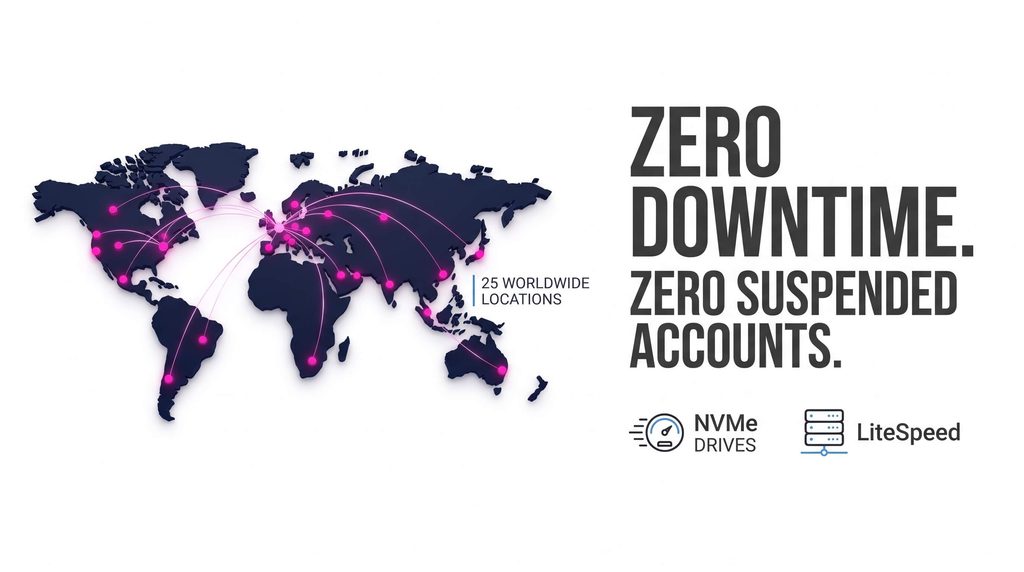
We kept customer sites online with zero downtime and zero suspended accounts. That came from preparation, not luck. Twenty years of security events taught us to build for isolation and fast response, so a same day emergency did not turn into an outage for our customers.
Learning From Past Cybersecurity Events to Fortify Our Servers
We did not predict PHP2Shell. Nobody did. What we had was experience. In 20+ years of hosting, we have lived through earlier security scares, and each one changed how we build.
The lesson was simple. Assume the next flaw is coming, and design so one problem cannot spread. Isolation is a rule for us, not an afterthought.
Isolation shows up in the structure. We run servers in 25 worldwide locations, so no single place carries every customer. If you need harder separation for a demanding client, a USA VPS or a dedicated server gives that client its own resources.
Our hardware helps too. We use Intel Dual Xeon servers with NVMe drives and a LiteSpeed web server. Fast hardware does not stop a flaw, but it does give maintenance and patching more room to run without hurting customer sites.
Experience also taught us about communication. During a crisis, customers can handle bad news but not silence. We learned to say what we know, what we do not, and when the next update will arrive.
None of this is glamorous. It is checklists, separation, and practice. Boring preparation is what turns a global emergency into a normal working day.
The honest summary is this. We survived because we had learned from earlier events, not because we got lucky. Experience made us build in a way that gave us room to move on October 21.
Staying Online With Zero Downtime While the Industry Scrambled
Here is the claim, stated clearly. While much of the industry scrambled, SkyNetHosting remained fully operational. We recorded zero downtime and zero suspended accounts during the PHP2Shell response.
We are asking you to check that, not to trust it. If you are weighing a switch, ask every provider for its timeline from October 21, ours included. A confident host will answer directly.
Layers helped. Cloudflare said it rolled out stopgap rules to all plans after seeing early attack attempts. A CloudFlare CDN is a useful extra layer, though a stopgap rule is not a replacement for patching PHP.
People mattered as well. Our 24/7 support is staffed by a team, so questions at three in the morning reach someone. Our end user support page explains how that works for reseller customers.
Zero downtime is a strong phrase, so here is what we mean. Customer websites and accounts stayed up and active throughout the response. No account was suspended to make our own job easier.
We also kept the patch in view. The fix for this flaw is the updated PHP release, and no other layer replaces it. Everything else, including firewalls and rules, only buys time.
No host can promise that a crisis will never come. What you can ask is how the provider behaves when one arrives. That is the test we want to be judged on.
Who Is The Number One Reseller Hosting Provider After Black October?
We say it is SkyNetHosting, and we say it plainly. We also tell you not to take our word for it. Compare how each provider handled October 21, then choose the one whose record you can check.
Making the Case That SkyNetHosting Is the Best Reseller Hosting Platform
We will be bold about this. We believe SkyNetHosting is the best reseller hosting platform for agencies that cannot afford downtime. We also think you should test that belief.
Here is the case. We have 20+ years in business and more than 700,000 websites hosted. We run 25 worldwide locations with 24/7 support, on Intel Dual Xeon servers with NVMe drives.
Our reseller plans include a free WHMCS license, a bundled value of $15.95 a month, though you should confirm current plan details. You can compare what each plan includes on our reseller features page. If you run resellers of your own, look at our master reseller hosting option.
Then add October 21. Zero downtime and zero suspended accounts during a global emergency is the sort of record that rankings and reviews rarely capture.
Agency owners often ask what separates one reseller host from another. Our answer is the unglamorous list: patching speed, honest communication, solid hardware, and support that answers. Features win on a spec sheet, but behavior wins during a crisis.
We know no host is perfect, and we do not claim to be. We claim to be the best choice for agencies that cannot afford downtime, and we back it with a record you can check.
Be careful with rankings, including any that praise us. A guide on best reseller hosting 2026 and how to separate real value from fake reviews and marketing hype explains how to test claims for yourself. We would rather you check than believe us blindly.
Staying Reliable When Industry Wide Crises Hit Hosting Infrastructure
Good hosting looks the same as bad hosting on a quiet day. The difference shows when something breaks across the whole industry. That is the moment you learn what you really bought.
A crisis test has a few parts. How fast does the provider patch? Does it keep customers online while it does? Does it explain what is going on? Does it avoid blaming customers for its own emergency?
Ask about old software too. If any of your clients run PHP 8.1 or older, ask what the provider does for them, since upstream patches do not exist for those versions. A host that has a plan for that is a host that thinks ahead.
A fair test is to ask for evidence. Request the timeline of what changed and when. Look for specific times, not vague reassurance.
Also look at tone. Providers that take responsibility and share details tend to behave the same way in the next crisis. Providers that deflect tend to deflect again.
This is what we mean by proactive. Prepare before the emergency, communicate during it, and clean up after it. Our servers did not collapse when the industry panicked, and that is the standard we hold ourselves to.
How Can Agencies Protect Themselves From Future Hosting Crises?
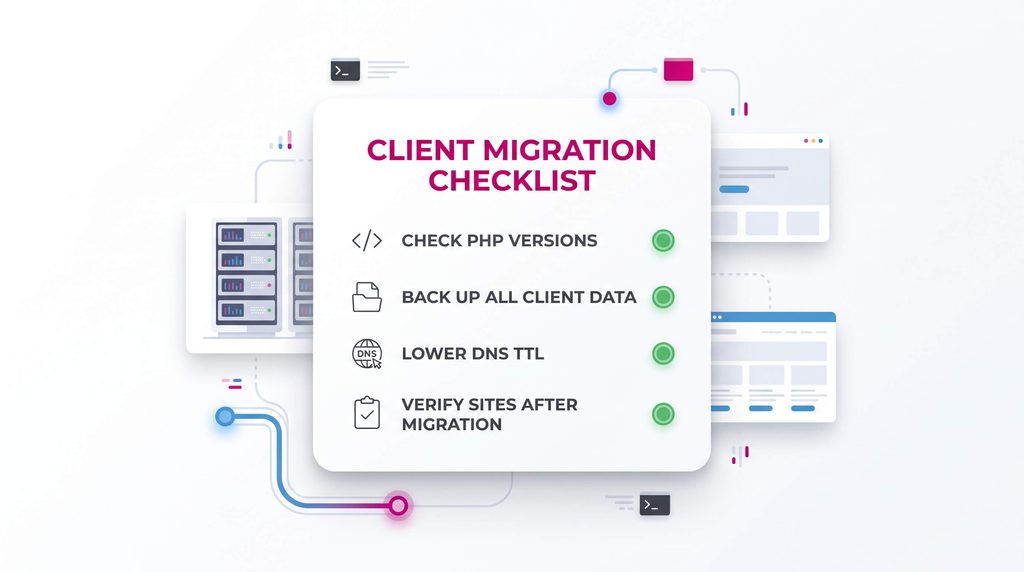
Know which PHP versions your clients run, choose a host that patches fast and communicates clearly, keep your own backups, and move off fragile setups before the next emergency. Do this while things are calm, because crises do not wait for your calendar.
Migrating to a Proactive Hosting Partner
This part is for IT directors, web designers, and agency owners. Stop risking your business on setups that stall during industry wide scares. Your clients judge you by uptime, not by who your provider is.
Start with an inventory. List every client site, its PHP version, its host, and who owns the domain. You cannot plan a move you have not mapped.
Then ask direct questions of any new provider. How quickly did you patch on October 21? Were any accounts suspended? What support hours do you offer, and who answers? Ask us the same questions.
Plan the move in stages. Migrate a low risk site first, test it, then move the rest. Lower DNS TTL values a day before a switch, and keep the old account until you are sure the new one works.
Budget time for client communication too. Tell clients a migration is planned, when it happens, and what they might notice. Most clients are relaxed when told early and annoyed when surprised.
Finally, keep a rollback path. Until the new site is verified, the old one is your safety net. Moving carefully takes longer than moving fast, and it avoids the outage you were trying to prevent.
Ask what migration help each provider includes, ours included, since this varies and changes. Client management also matters. A tool like our free WHMCS license can keep billing and support in one place after the move.
Securing Your Agency’s Reputation With Reliable Reseller Hosting
Prepare now, not after the next flaw. Move your client sites into a stable, secure environment and make sure each one runs a supported PHP version.
Keep your own backups, separate from your host. A provider can do everything right and you still want a copy you control. Test a restore at least once.
Write a short client communication plan. Decide who tells clients when something happens, and what the message says. A calm, early note protects trust.
If a client site is demanding, give it room. A fast NVMe VPS can take a busy store out of a shared environment and give it dedicated resources.
Check PHP versions this week. In cPanel, the MultiPHP Manager shows each domain’s version. Move anything on an old branch to a supported one, and test the site afterward.
Then review passwords, plugins, and unused sites. Forgotten staging copies and old campaign pages are easy targets because nobody watches them.
The goal is simple. When the next industry wide scare arrives, you want to be the agency that told clients everything was fine, and was right.
Why Is SkyNetHosting.net The Ultimate Choice For Your Reseller Business Today?
Because when a critical PHP flaw hit the whole industry, SkyNetHosting stayed online with zero downtime and zero suspended accounts. It pairs that record with 20+ years of experience, 25 worldwide locations, and 24/7 support. For an agency, that is the point of a hosting partner.
Choosing the Best Reseller Hosting That Stayed Online Through Black October
Let us pull it together. Black October was a real test. Two critical PHP flaws, disclosed on October 21, forced every host to patch quickly.
Much of the industry went into emergency maintenance. Some hosts switched off features, and some sites went dark. SkyNetHosting kept customer sites online, and our customers did not lose a single second of uptime.
That record came from experience, isolation, and fast response, not luck. It is also something you can ask us to back up, and you should.
Choosing a host is a decision about behavior under pressure. Features can be copied. A record cannot.
Our record on October 21 is the reason we feel comfortable making this claim. We hope you will test it, because we think we will pass.
If your host went through a rough week, you now know what that cost you. You also know what to ask the next provider.
Taking Action Now to Partner With SkyNetHosting
Stop waiting for your current host’s next server crash. The next flaw is coming, and you do not get to choose the date.
Visit SkyNetHosting.net right now and switch to a platform that proved itself under pressure. Start by looking at our reseller hosting plans, and compare them against what your current host did last week.
Switching feels like a big job, so break it down. Pick one client site, move it, and watch it for a week. Confidence grows quickly once the first move goes well.
You can also start by talking to us. Ask how we handled October 21, what support you would get, and what a move would involve for your clients. A direct conversation tells you more than any web page.
Protect your agency’s future while things are calm. Check the facts, ask us the hard questions, and then move your clients to a home that stayed online when it mattered.
