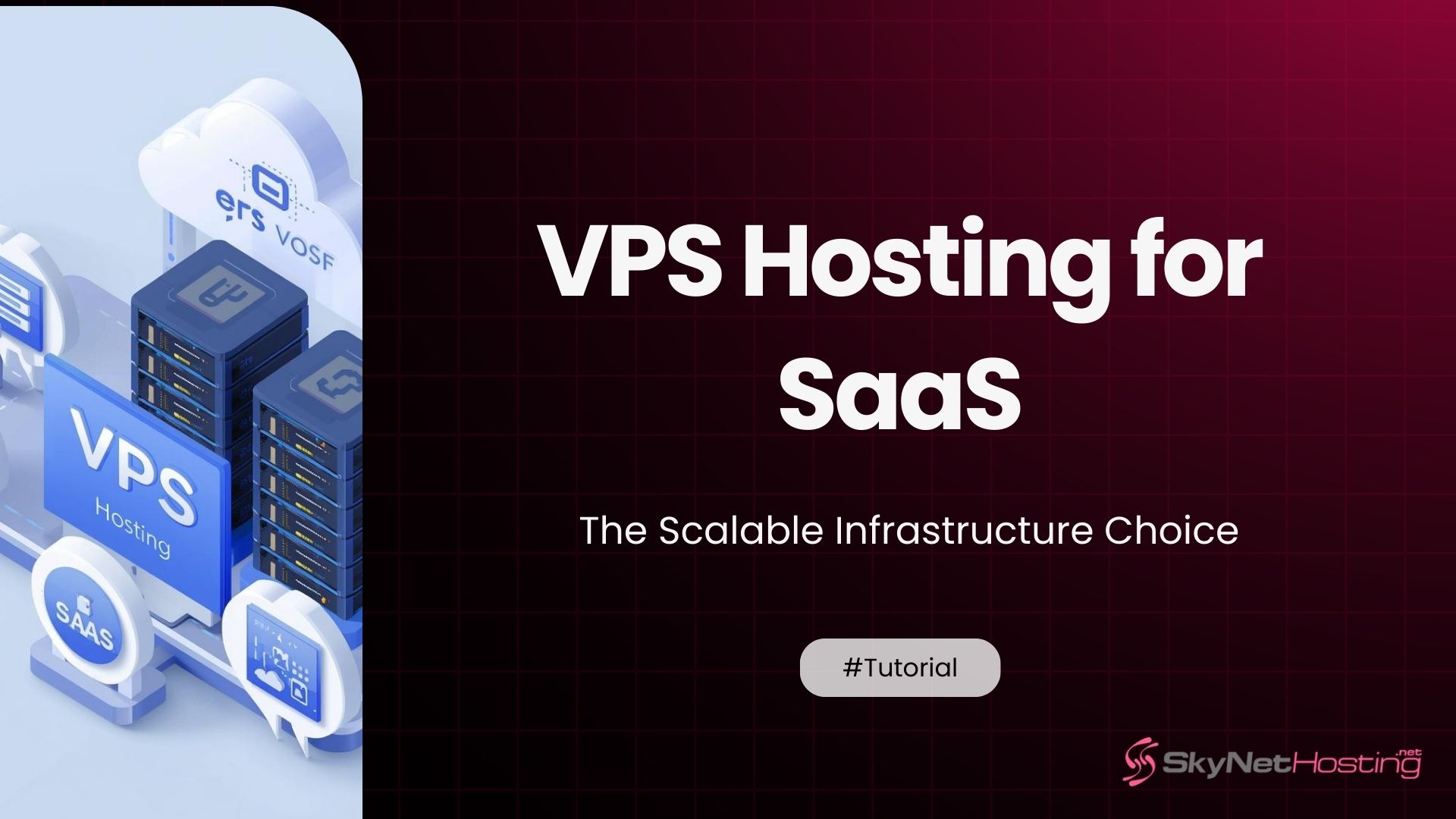
VPS Hosting for SaaS: The Scalable Infrastructure Choice
TL;DR
- VPS hosting balances cost, isolation, performance for SaaS multi-tenant apps unlike shared or complex clouds.
- Dedicated RAM/CPU, NVMe storage ensure consistent speed, security for concurrent users and databases.
- Root access enables custom stacks (Node.js, Docker), scaling vertically then horizontally with load balancers.
- Predictable flat pricing avoids cloud bill shocks; better for predictable workloads without vendor lock-in.
- Managed VPS suits startups without DevOps; unmanaged for teams needing full control and flexibility.
- Skynethosting.net offers NVMe, global DCs, free WHMCS for SaaS billing automation and support.
If you’re building or scaling a SaaS product, you’ve probably hit that confusing fork in the road regarding infrastructure. On one side, you have shared hosting—cheap, but risky for a growing app. On the other, you have the massive hyperscale clouds like AWS or Azure—powerful, but complex and capable of draining your bank account overnight if you misconfigure a single setting.
Then there’s the middle path, the one that smart SaaS founders often take but don’t brag about enough: VPS hosting for SaaS.
After spending a decade in the hosting trenches, I’ve seen countless startups burn cash on over-engineered cloud setups they didn’t need, and just as many crash their apps because they stuck with shared hosting too long. Today, I want to walk you through why a Virtual Private Server (VPS) is often the Goldilocks solution for SaaS—providing the scalability you need without the headache (or price tag) you don’t.
What Is SaaS Hosting and Why Infrastructure Matters
When you are running a SaaS platform, your hosting isn’t just a utility bill; it’s the foundation of your product. If your infrastructure wobbles, your churn rate spikes. It is that simple.
SaaS delivery model overview
Unlike a standard brochure website, your SaaS application is a living, breathing environment. You have multiple users logging in simultaneously, database queries firing off constantly, and background jobs processing data. This is what we call a multi-tenant architecture—where many customers rely on a single instance of your software.
Infrastructure requirements for SaaS success
To make this work, you need three things: isolation, reliability, and speed. You can’t have one customer’s heavy usage slowing down the dashboard for everyone else. This is the main reason why shared hosting usually fails for SaaS—it lacks the resource guarantees required to keep a multi-tenant environment stable.
Why performance directly impacts user retention
I remember a client who built a fantastic project management tool. It had great features, but the dashboard took four seconds to load. In the consumer world, four seconds is annoying. In the B2B SaaS world, four seconds is a dealbreaker. They moved to a high-performance VPS, cut load times to under a second, and their trial-to-paid conversion rate jumped by 15% almost overnight. Speed is a feature.
Why VPS Hosting Is Ideal for SaaS Applications
So, why do I recommend a VPS for SaaS applications so often? It comes down to balance.
Dedicated resources without full dedicated cost
A VPS gives you a slice of a physical server that is strictly yours. The RAM and CPU cores assigned to you are reserved. Unlike shared hosting, where a noisy neighbor can steal your resources, a VPS ensures your app has the power it needs, consistently.
Isolation for multi-tenant environments
Security is non-negotiable in SaaS. If you are handling customer data, you need isolation. A VPS provides a virtualized environment that is distinct from other users on the hardware. This means if another server on the network gets attacked, your environment remains secure and unaffected.
Predictable performance vs shared hosting
When you are demoing your product to a potential enterprise client, you need to know it will work. Shared hosting is unpredictable. VPS hosting provides a baseline of performance that you can rely on, ensuring your demo goes smoothly every time.
Better cost control compared to hyperscale cloud
This is a big one. The “pay-as-you-go” model of big clouds sounds great until you get a surprise bill for $3,000 because of egress fees. VPS hosting usually comes with a flat monthly fee. You know exactly what you are paying, which is crucial for a startup managing burn rate.
Key VPS Features Required for SaaS Platforms
Not all VPS plans are created equal. If you are shopping around, here is your checklist.
CPU and RAM optimization for concurrent users
SaaS apps are often CPU-intensive. Look for a VPS that offers high-performance cores. If you expect 500 concurrent users, you can’t run on a single core with 1GB of RAM. You need the ability to scale those specs up.
NVMe/SSD storage for database-heavy workloads
Your database is the bottleneck. Always choose NVMe storage. It is significantly faster than standard SSDs and lightyears ahead of old spinning disks. This ensures that when a user searches for a record, the result appears instantly.
High availability and uptime guarantees
Check the Service Level Agreement (SLA). You want a provider that guarantees 99.9% uptime or higher. Downtime costs you trust, and trust is the currency of SaaS.
Root access for custom environments
As a developer, you need control. Maybe you need a specific version of Redis or a custom PHP extension. A VPS gives you root access, allowing you to configure the server environment exactly how your application needs it.
VPS vs Cloud for SaaS: Which Is Better?

This is the most common question I get: “Should I use a VPS or go straight to the Cloud?”
Cost predictability comparison
Cloud billing is complex. You pay for compute, storage, bandwidth, and API requests separately. VPS is simple: fast storage, predictable bandwidth, and a fixed price. For early to mid-stage SaaS, VPS wins on budget clarity.
Performance consistency
On public clouds, performance can sometimes fluctuate based on the “stolen time” of the hypervisor. High-quality VPS providers often offer better “price-to-performance” ratios because you aren’t paying for the massive overhead of the cloud provider’s ecosystem.
Vendor lock-in risks
If you build your app using proprietary cloud services (like AWS Lambda or DynamoDB), moving away is a nightmare. If you build on a standard Linux VPS, you can migrate your code to any other provider in an afternoon.
When to choose VPS over cloud
If you have a predictable workload and want to keep costs low, choose VPS. If you have unpredictable, massive spikes in traffic (like a ticket sales site) that need auto-scaling every hour, cloud might be worth the premium.
How to Architect a SaaS Application on VPS
Ready to deploy? Here is how to set it up right.
Recommended server stack (Linux, Node.js, PHP, etc.)
Most SaaS apps run beautifully on a standard LAMP (Linux, Apache, MySQL, PHP) or LEMP (Nginx) stack. Alternatively, Node.js is popular for real-time apps. The beauty of a VPS is that you can choose the OS—Ubuntu, CentOS, or Debian—that fits your team’s skills.
Database deployment strategies
For smaller SaaS apps, running the database on the same VPS as the web server is fine. As you grow, you should move the database to a separate private VPS to improve performance and security.
Using containers (Docker) on VPS
Docker is a lifesaver for SaaS deployment on VPS. It allows you to package your app and its dependencies into a container. This makes deploying updates safer and ensures your app runs the same on your laptop as it does on the server.
Reverse proxies and load handling
Using Nginx as a reverse proxy in front of your application server is a best practice. It handles SSL termination, serves static files efficiently, and provides a layer of protection against basic attacks.
Scaling Your SaaS Platform Using VPS
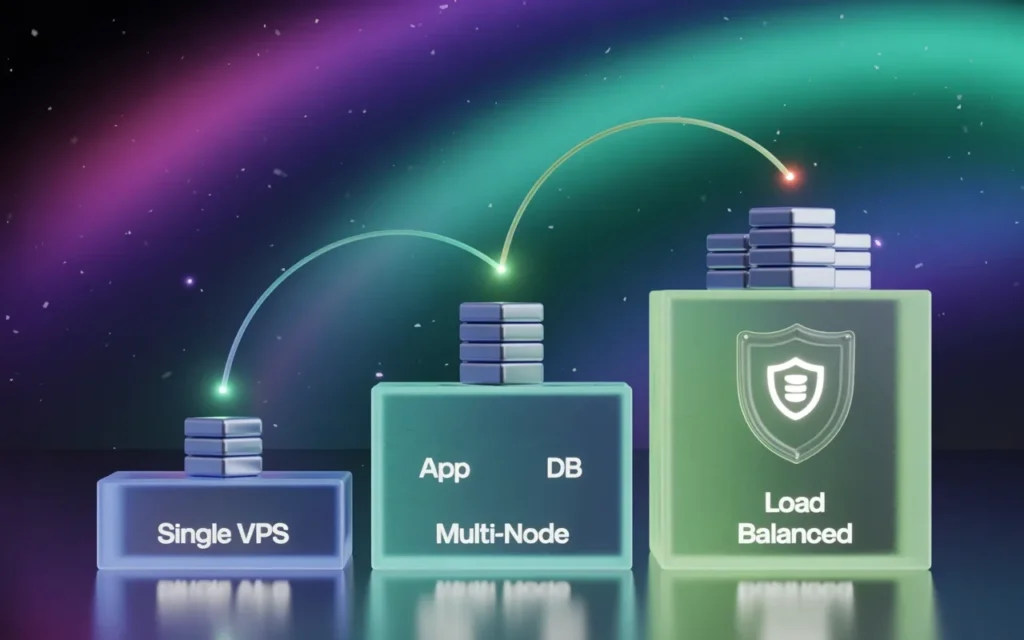
Success brings a new problem: traffic. Here is how to handle growth.
Vertical scaling strategies
This is the easiest first step. If your server is slow, upgrade the plan. Move from 4GB RAM to 8GB, or add more CPU cores. This is called “scaling up” and can usually be done with a simple reboot.
Adding additional VPS nodes
Eventually, a single server won’t be enough. You can start adding more VPS nodes—one for your database, one for your application, and maybe one for a Redis cache.
Load balancing and redundancy
Once you have multiple application servers, you place a load balancer in front of them. This distributes traffic across your servers, ensuring no single server gets overwhelmed.
Monitoring and performance tuning
You can’t fix what you don’t see. Use monitoring tools to watch CPU usage and memory. If you see consistent spikes, it’s time to scale again.
Security Considerations for SaaS on VPS
You are holding the keys to your customers’ data. Treat it with respect.
Data isolation and encryption
Ensure your database is encrypted at rest. Use strong isolation techniques if you are hosting multiple tenants on the same infrastructure.
Firewall and intrusion protection
Configure a firewall (like UFW or iptables) to block all ports except the ones you need (usually 80, 443, and 22). Consider using tools like Fail2Ban to block repeated failed login attempts.
Backup and disaster recovery
Assume your server will fail. It happens. You need automated backups—preferably stored in a different physical location than your server.
Compliance readiness (GDPR, PCI, etc.)
If you handle credit cards or European user data, your infrastructure needs to be compliant. A secure VPS allows you to implement the strict access controls required for GDPR and PCI compliance.
Managed vs Unmanaged VPS for SaaS Businesses
Do you want to be a sysadmin or a CEO?
When startups prefer managed VPS
If you don’t have a DevOps engineer on the team, go with managed VPS. The provider handles patches, security updates, and monitoring. It costs a bit more, but it frees you up to focus on code and customers.
DevOps-driven teams and unmanaged flexibility
If your team lives in the terminal, unmanaged VPS is cheaper and gives you total freedom. Just remember: if it breaks at 3 AM, you are the one fixing it.
Support requirements for SaaS uptime
Consider how critical uptime is. Managed services usually come with faster support response times, which can be a lifesaver during an outage.
Choosing the Right VPS Provider for SaaS Hosting
Your provider is your partner. Choose wisely.
Infrastructure reliability and SLA
Look for a provider with a proven track record. Read reviews. Check their status page history.
Global data center reach
If your customers are in Europe, don’t host your server in California. Latency matters. Choose a provider with data centers near your user base.
Scalability options
Make sure the provider has room for you to grow. Can you easily upgrade to a dedicated server later if you need to?
Automation and API support
As you grow, you might want to automate server creation. A provider with a robust API allows you to build infrastructure-as-code pipelines.
Why Skynethosting.net Is a Strong Choice for SaaS VPS Hosting
I’ve worked with a lot of hosts, and when it comes to balancing performance and price, Skynethosting.net is a serious contender for SaaS founders.
High-performance VPS infrastructure
They use top-tier hardware. We are talking about modern processors and pure NVMe Storage that makes database queries fly. For a SaaS app, that speed is money in the bank.
Multiple global data center locations
Need to be close to customers in London? Or maybe Singapore? Skynethosting.net has worldwide locations, allowing you to reduce latency for your global user base.
WHMCS-ready automation for SaaS billing
If you are reselling hosting or services as part of your SaaS, their inclusion of a free WHMCS license is a massive value add. It automates billing and provisioning, saving you hours of admin work.
Reliable support for growing SaaS teams
When you are scaling, you need help. Their 24/7 customer service is responsive and knowledgeable, acting as an extension of your own team.
Common Mistakes SaaS Founders Make When Choosing Hosting
Learn from the errors of others so you don’t have to repeat them.
Overpaying for hyperscale cloud early
I’ve seen startups burn $5,000 a month on AWS for traffic that could have been handled by a $100 VPS. Don’t pay for complexity you don’t use yet.
Underestimating performance needs
Don’t cheap out on the database server. If your app feels slow, users will leave. Invest in RAM and NVMe storage.
Ignoring backup and scaling plans
“I’ll set up backups later” is a famous last sentence. Configure your backups on day one.
VPS offers the best balance of cost, control, and scalability for SaaS
Building a SaaS is hard enough without fighting your infrastructure. VPS hosting for SaaS offers that sweet spot: the power and isolation of a dedicated environment, without the complexity and cost of the hyperscale cloud.
By choosing the right architecture and a partner like Skynethosting.net, you build a foundation that can handle your first 100 customers and your first 100,000.
Choosing the right infrastructure early prevents expensive migrations later
Take the time to evaluate your needs. If you are ready to deploy on high-performance infrastructure that grows with you, check out the VPS plans at Skynethosting.net today.
FAQs
Why choose VPS for SaaS over shared hosting or cloud?
Shared lacks resource guarantees causing slowdowns from neighbors; clouds overkill with complex billing, lock-in. VPS provides dedicated slices, root control, flat costs ideal for multi-tenant stability, scaling without surprises for growing apps.
What VPS specs optimize SaaS performance?
NVMe SSD for fast databases, 4GB+ RAM/2+ CPU cores for concurrency, high-frequency processors for Node.js. 1Gbps bandwidth, root access for Docker/NGINX; global DCs reduce latency for worldwide users effectively.
How to architect SaaS on VPS infrastructure?
Use LEMP stack, Docker containers, NGINX reverse proxy, separate DB VPS as growth hits. Automate backups, monitor CPU/memory; vertical scale first by upgrading RAM/cores before adding load-balanced nodes.
What security measures for SaaS on VPS?
Encrypt data at rest, UFW firewall (ports 80/443/22), Fail2Ban for brute-force, automated offsite backups. Isolate tenants, comply GDPR/PCI via access controls on virtualized environments securely.
Managed vs unmanaged VPS for SaaS teams?
Managed handles OS/security/updates freeing devs for code; suits non-DevOps startups. Unmanaged cheaper for experienced teams wanting custom configs but requires 24/7 monitoring responsibility.
Why Skynethosting.net for SaaS VPS hosting?
High-performance NVMe, 25+ data centers, free WHMCS for billing, responsive support as team extension. Reliable SLA, scalability from startup to enterprise without cloud complexity or costs.