
Is a Master Reseller Business Right for You? 5 Questions to Ask Before You Start
I have spent the last ten years inside the web hosting industry. In that time, I have watched hundreds of people start hosting businesses. Some built real, lasting companies. Others quit within six months.
One question comes up again and again. Should you start with regular reseller hosting, or jump straight into a master reseller business?
This guide answers that question honestly. I will walk you through five questions to ask yourself first. By the end, you will know which path fits your goals, your budget, and your comfort level.
What Is a Master Reseller Hosting Business?
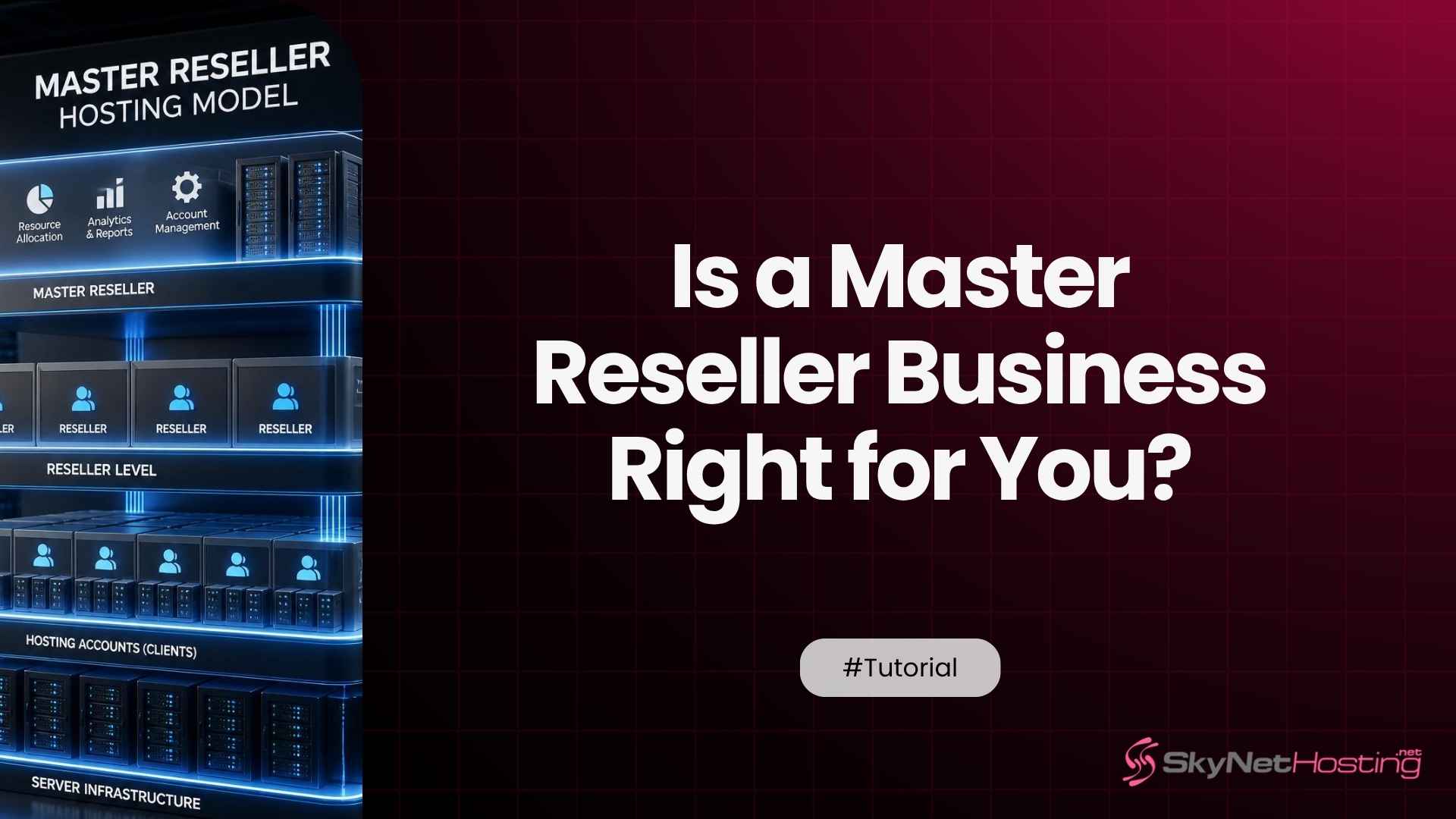
A master reseller hosting business lets you buy a large block of server resources from a provider, then sell both hosting accounts and reseller accounts under your own brand. You are not just selling hosting to website owners. You are also selling hosting businesses to other resellers.
How master reseller hosting works
You start by buying a master reseller plan. This plan gives you a large pool of disk space, bandwidth, and cPanel accounts to work with.
You then split that pool into smaller packages. Some of those packages go straight to website owners as normal hosting accounts.
Other packages come with WHM access. This lets a sub-reseller build their own cPanel accounts inside your master account, under their own brand name.
I remember setting up my first master reseller account years ago. It felt strange at first, handing over WHM access to someone else. But once the automation was in place, it ran smoothly on its own.
How it differs from standard reseller hosting
Standard reseller hosting lets you create and sell individual cPanel accounts to your own clients. You never hand over WHM access to anyone else.
Master reseller hosting adds one more layer on top of that. You sell WHM access itself. Your sub-resellers can then create their own client accounts, set their own prices, and run their own hosting brand.
Think of standard reseller hosting as running one shop. Master reseller hosting is closer to leasing out several shop units inside a mall that you control.
Who typically chooses this business model
Agencies already selling reseller hosting to a network of freelance developers often move into this model next.
Experienced hosting resellers who want a second income stream from sub-resellers are another common group.
Entrepreneurs building a hosting brand for a specific country or niche also choose this route. They license accounts to local partners instead of managing every client directly.
In my experience, the resellers who succeed with this model are rarely beginners. They usually spent a year or two running standard reseller hosting first, learned the support side, then expanded once demand was clear.
Why More Entrepreneurs Are Starting Hosting Businesses
More entrepreneurs are starting hosting businesses because hosting brings steady monthly income, does not need expensive equipment, and fits naturally alongside web design, SEO, and other freelance services people already offer.
The appeal of recurring revenue
Hosting is one of the clearest examples of recurring revenue you can build as a small business owner. Every hosting client pays every month or every year.
This is very different from one-off project work. A website build pays once. A hosting client keeps paying for years, often without you doing much extra work.
Ten clients paying ten dollars a month does not sound like much on its own. But add it up over a full year, then multiply it as your client list grows, and the numbers start to matter.
I have watched small hosting side businesses turn into full time income within two years, simply because the client count kept growing while the workload per client stayed small.
Low infrastructure investment
You do not need to buy servers. You do not need a server room, a network engineer, or a dedicated security team.
Your provider handles the hardware, the uptime, and the security patches in the background. You focus on customers, pricing, and growth instead.
This is the main reason a hosting business is easier to start than most other technology businesses. The heavy lifting is already done for you.
Compare this to opening almost any other kind of business. There is no inventory to store, no physical shop rent, and no equipment that breaks down and needs replacing.
Opportunities for agencies and freelancers
If you already build websites, hosting is a natural next step. Starting a web hosting reseller business alongside your design work adds a second income stream without adding a second job.
Clients would rather buy hosting from someone they already trust than search for a stranger online. That someone can be you.
Agencies that add reseller hosting for their client base often see client retention improve. Clients rarely move their entire website away from the person who is also hosting it.
Question 1: Do You Already Have Clients Who Need Hosting?
The first question to ask yourself is simple. Do you already have clients who need hosting today? If the answer is yes, a master reseller business becomes much easier to justify.
Leveraging an existing customer base
If you already manage twenty or thirty websites for clients, you have an instant customer base sitting in front of you.
You do not need to spend money on ads or wait months for new leads to show up. You already have the relationships. You just need the right offer.
A short email explaining your new hosting service is often enough. Existing clients already trust you, so the conversion rate is usually much higher than cold outreach to strangers.
Building recurring income from current services
Many freelancers charge a one-time design fee, then walk away once the site is live. Adding hosting turns that one-time client into a recurring client.
This single change can turn an unpredictable freelance income into something far steadier, month after month.
I have seen freelancers double their monthly income within a year, without taking on a single new client, just by adding hosting to their existing service list.
When starting from zero may be more challenging
If you do not have any clients yet, a master reseller business may be too much too soon. You would be paying for a large pool of resources with no one to sell to.
In that case, it often makes more sense to start smaller. Compare your options with a guide like shared vs reseller hosting, prove the model with a handful of clients, then upgrade once demand is real.
Question 2: Are You Comfortable Managing Customer Support?
Running any hosting business means someone will contact you when their website goes down, and it will not always happen during office hours. If you are not ready for that responsibility, it is worth thinking through before you start.
Technical support expectations
Clients expect fast answers. Even a simple problem, like a forgotten password, needs a quick reply to keep them confident in your service.
You do not need to be a server engineer to run this business. But you do need patience, and a clear process for handling requests as they come in.
Early on, I answered every ticket myself, at all hours. It taught me exactly what my clients struggled with most, which later shaped my entire support process.
Billing and account management
You are also responsible for invoices, renewals, and the occasional refund request. Clients will ask about their bill more often than you might expect.
A clear billing process from day one prevents most of these headaches before they start.
Setting realistic service commitments
Do not promise instant twenty four hour phone support if you are running this business alone in the evenings after another job.
Set honest expectations from the start. Clients respect clear communication far more than big promises you cannot keep.
A simple support hours page on your website, stating when clients can expect a reply, removes most of the guesswork and prevents frustration on both sides.
Question 3: Do You Plan to Sell Hosting Alone or Build a Complete Web Services Business?
Master reseller hosting works best as part of a bigger web services business, not as a stand-alone product sold on its own.
Combining hosting with web design
Hosting pairs naturally with design work. A client who hires you to build a site will usually take your hosting recommendation too, especially if you have already earned their trust.
This is one reason agencies and developers often choose master reseller hosting once their client list grows past a certain size.
Adding maintenance and SEO services
Once a client is hosted with you, it becomes far easier to offer monthly maintenance, backups, and even basic SEO work.
Each extra service increases the total value of that one client relationship, without you needing to find a brand new customer.
Bundling these services together, instead of billing separately, also makes life easier for the client. One invoice, one point of contact, and one company they trust with everything.
Increasing customer lifetime value
A client paying only for hosting might be worth ten dollars a month. The same client paying for hosting, maintenance, and SEO could be worth well over a hundred dollars a month.
This difference is one of the strongest reasons agencies choose master reseller hosting over simple hosting resale alone.
I have seen agencies restructure their entire pricing around this idea, moving away from one-time project fees and toward monthly packages that include hosting as the anchor service.
Question 4: Can You Scale as Your Customer Base Grows?
Master reseller hosting only makes sense if you have a real plan for growth. Otherwise, you end up paying for capacity you do not need yet.
Managing sub-resellers
Sub-resellers bring their own clients, but they also bring their own support questions and billing issues, one step removed from your own customers.
You need clear rules from the start. Decide what you support directly, and what your sub-resellers must handle on their own.
Writing this down in a simple agreement, even a short one, avoids confusion later when a sub-reseller’s client has a problem at midnight.
Resource planning
As more accounts join your server, disk space and bandwidth use grows faster than most new resellers expect.
Good resource planning, supported by reliable automation behind the scenes, means you catch usage problems early, not after a client complains about a slow site.
Choosing scalable infrastructure
Not every hosting provider can support fast growth. Fast storage, enough data center locations, and clear upgrade tiers matter more once you start scaling.
Ask your provider what happens when you outgrow your current plan before you sign up, not after you are already stuck.
I always tell new resellers to ask about upgrade pricing on day one. A provider that hides this information usually makes the upgrade process painful later.
Question 5: Are You Prepared to Invest in Automation?
You cannot run a master reseller business by hand. Automation is not optional here. It is the only way the numbers actually work once you pass a handful of clients.
Using WHMCS for billing
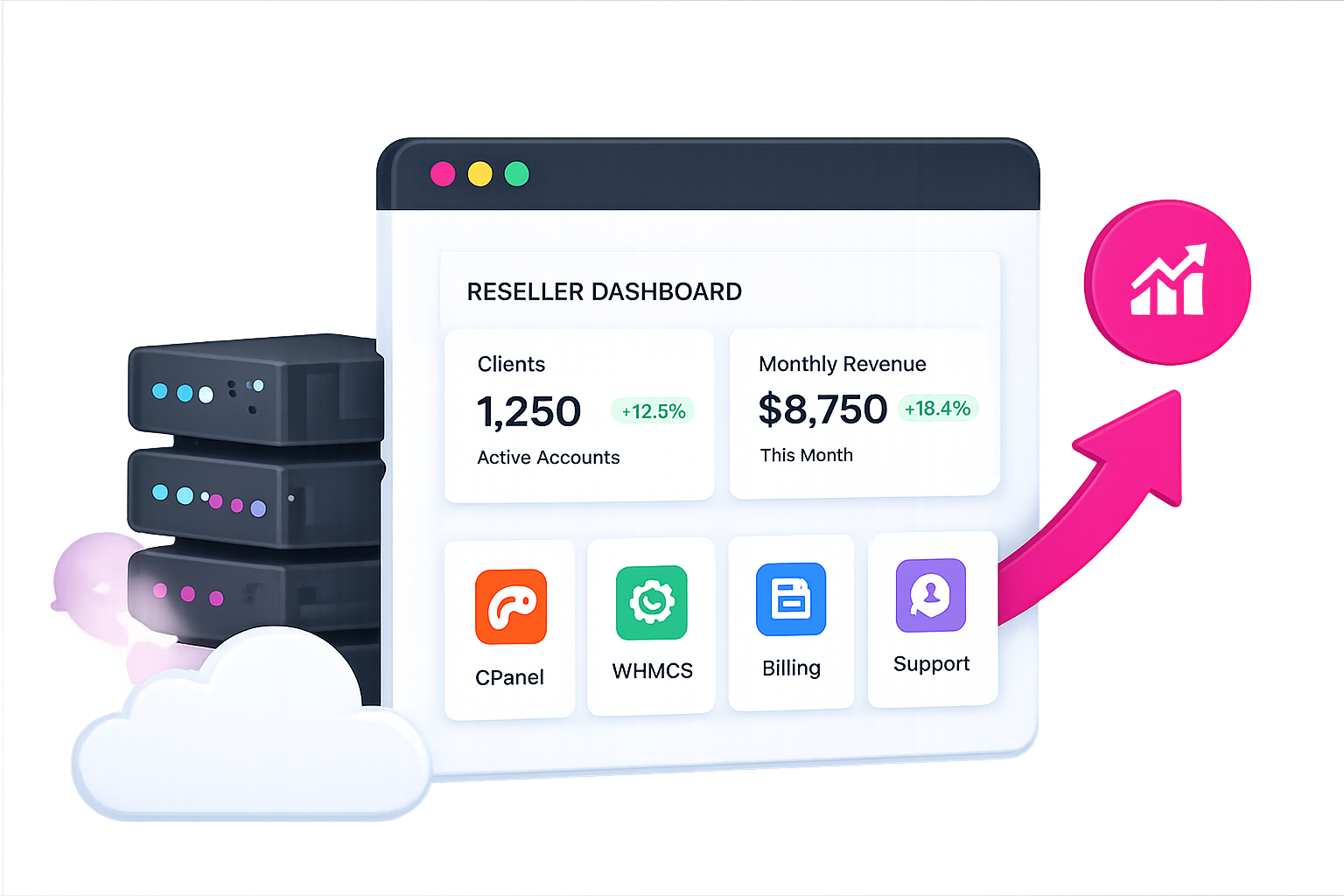
WHMCS is the billing software most hosting businesses run on. It handles invoices, payment reminders, and renewals automatically, without you chasing anyone down.
Without it, you would spend hours every single week just tracking who has paid and who has not.
Before I automated my own billing, I spent entire Sunday evenings checking spreadsheets and sending payment reminders by hand. That time is much better spent talking to new clients.
Automating account provisioning
Good WHMCS reseller automation means a client can pay, and their hosting account appears within seconds, without you doing anything manually.
This matters even more once sub-resellers are involved, since their own clients expect that same instant setup too.
Reducing manual administration
Following a proper WHMCS reseller setup guide early on saves you weeks of frustration later. The less time you spend on manual account setup, the more time you have for growing the business.
A system configured properly once tends to keep running quietly in the background for years.
Set aside a single weekend to get this right at the start. It will save you far more than a weekend’s worth of manual work every month after that.
Signs a Master Reseller Business Is Right for You
A few clear signs point toward master reseller hosting being the right fit for you right now.
You already serve website clients
You already build or manage websites for other people, and they trust your recommendations without much convincing.
This trust is worth more than any advertising budget. It is the single biggest advantage new master resellers can start with.
You want predictable recurring revenue
You are tired of one-off project income and want monthly income you can actually count on and plan around.
Predictable income also makes it easier to plan hiring, marketing spend, and even your own personal budget with more confidence.
You plan to grow beyond a handful of hosting accounts
You are thinking in terms of dozens or hundreds of accounts over time, not five or six clients you already know personally.
If growth is genuinely part of your plan, the extra cost of a master reseller account pays for itself far sooner than most people expect.
Signs You Should Start With Standard Reseller Hosting Instead
Sometimes the smarter move is to start smaller. Here is when standard reseller hosting makes more sense for now.
You’re just learning the hosting business
If this is your first time running any kind of hosting service, a budget reseller hosting plan lets you learn the basics without a large upfront cost.
Your customer base is still small
A handful of clients does not yet justify the cost of a full master reseller plan. Growing into it later is a smarter use of your budget.
You want lower operational complexity
Standard reseller hosting has fewer moving parts and fewer support layers to manage day to day.
Common Mistakes New Master Resellers Make
I have watched many new master resellers make the same mistakes over the years. Here are the ones worth avoiding.
Buying oversized plans too early
Paying for far more storage and bandwidth than you actually need wastes money you could be spending on marketing instead.
I have seen new resellers sign up for the biggest plan available on day one, then sit with mostly unused resources for over a year while their budget stayed tight elsewhere.
Ignoring automation
Skipping WHMCS or similar tools at the start almost always leads to burnout within the first year of running the business.
It feels manageable with five clients. It stops feeling manageable somewhere around client thirty, right when the business should be getting easier, not harder.
Underpricing hosting packages
New resellers often price too low just to attract early clients, then struggle to raise prices later without upsetting the customers they already have.
A better approach is to research what similar hosting packages cost in your market first, then price slightly under that, rather than guessing a number that feels safe.
Neglecting customer support processes
Without a support process written down somewhere, things fall apart fast the first time three clients contact you at the same time.
Even a simple shared document listing common problems and their fixes can turn a stressful afternoon into a calm, routine one.
How Does SkyNetHosting.Net Inc. Help New Master Resellers Succeed?
SkyNetHosting.net gives new master resellers the tools, pricing, and support structure needed to launch without taking on unnecessary risk.
Flexible master reseller hosting plans
Plans that scale from a smaller starting package up to a much larger resource pool as your client base grows over time.
Scalable upgrade paths
Clear upgrade paths mean you are never stuck rebuilding your business on new infrastructure halfway through a growth stretch.
White-label business tools
Your brand stays visible at every step, and your clients never see the hosting provider working behind the scenes.
Infrastructure designed for long-term growth
Data centers, fast NVMe storage, and support teams built specifically around reseller and master reseller businesses, rather than added on as an afterthought.
Frequently Asked Questions
Is master reseller hosting profitable?
Yes, when you already have clients or a real plan to find them. Profit comes from recurring monthly fees spread across many accounts, not from any single sale.
Profitability also depends heavily on how well you control support costs and how efficiently your billing is automated from the start.
How much does it cost to start?
Costs vary by provider, but master reseller plans usually cost more than basic reseller plans. This is because they include a larger resource pool and full WHM-level access.
It is worth comparing a few providers directly rather than picking the first one you find, since resource limits and support quality differ more than most beginners expect.
Can I upgrade from reseller hosting later?
Yes. Most hosting providers, including SkyNetHosting.net, let you upgrade from standard reseller hosting into master reseller hosting once your business grows into it.
This is actually the path I recommend most often. Start smaller, learn the business, then upgrade once your client numbers justify the change.
Do I need technical experience?
No deep technical background is required. Basic comfort with cPanel and WHM is usually enough, and most providers offer support to help fill in any gaps.
What matters far more than technical skill is patience with clients and a willingness to learn your billing system properly.
Conclusion
A master reseller business is best suited to entrepreneurs who are ready to build a scalable, recurring-revenue business, not just sell a few hosting accounts on the side.
Asking the right questions before investing helps you avoid unnecessary costs and operational headaches down the road.
Starting with the right plan and the right automation tools creates a stronger foundation for long-term success, whichever path you choose.
If you are ready to move forward, explore SkyNetHosting.net’s master reseller hosting plans to compare features, evaluate your options, and choose a solution that can grow alongside your business.
