
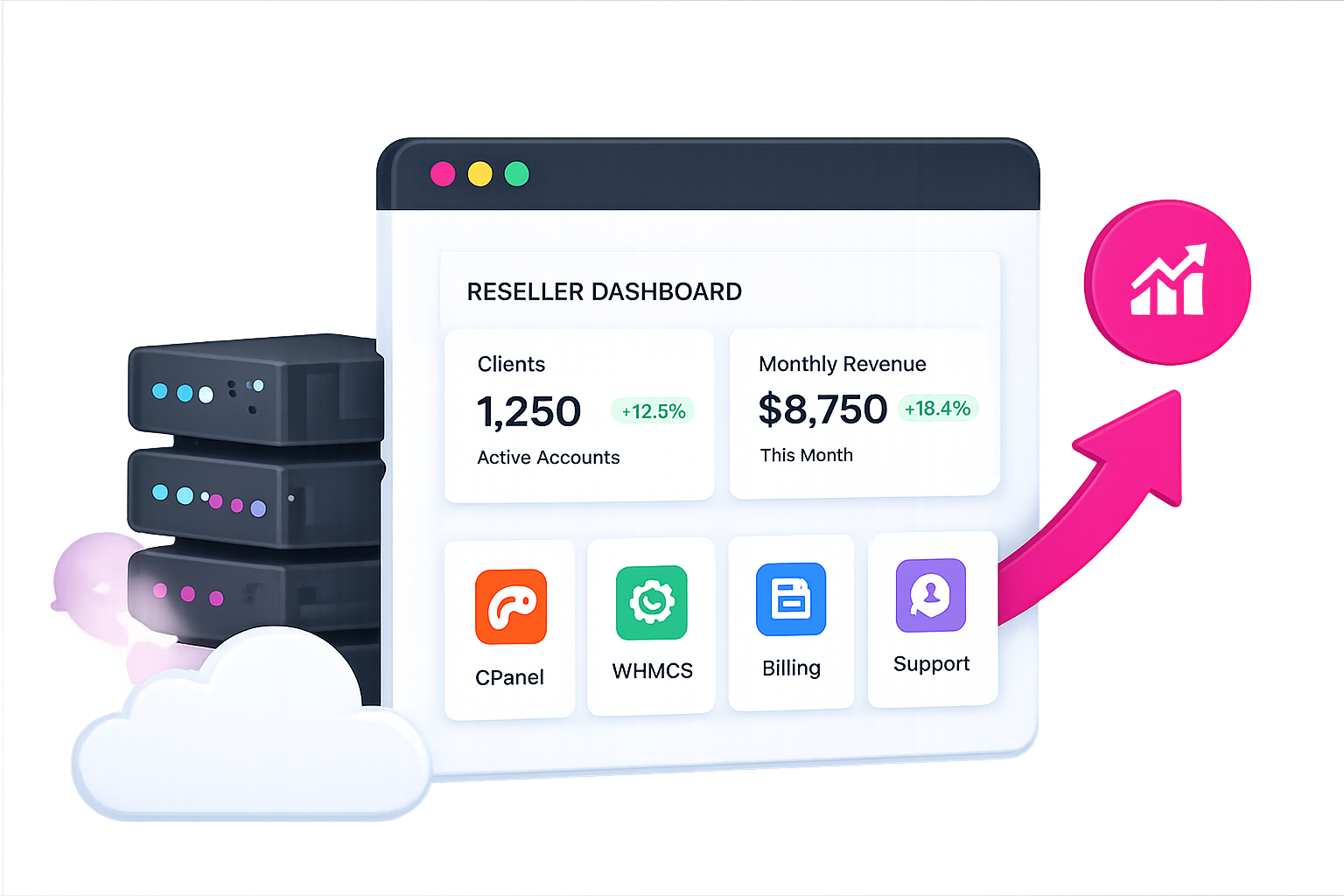
What Is Hosting Automation and Why Every Hosting Business Needs It From Day One
Picture this. A new client signs up for your hosting plan at 11pm on a Friday.
Without automation, that person waits. Their account sits in a queue. They stare at a confirmation email that promises access is coming soon. By Monday morning when you check your inbox, they have already emailed you twice asking what is happening. One of them is not particularly polite about it.
With automation, that same client gets their account provisioned in 60 seconds. Their welcome email arrives before they finish reading the order confirmation. Their cPanel login details are waiting. Their site is already going up before the weekend even starts.
Same client. Same service. Completely different experience. The only difference is whether you built your hosting business on automation from the beginning or bolted it on later as an afterthought.
Most new hosting businesses make the mistake of starting manual. They figure they will automate when they get bigger. By the time they get bigger, the manual processes are embedded, the client expectations are set, and the retrofit is painful.
This guide explains what hosting automation actually is, which tasks it covers, which tools make it possible, and why the right time to implement it is not later. It is today.
What Is Hosting Automation?
Definition and Core Concept
Hosting automation is the use of software systems to perform operational tasks in a hosting business without requiring manual intervention. Account creation, billing, payment collection, service suspension, domain renewals, welcome emails, and support ticket routing are all tasks that happen in every hosting business every day. Automation means those tasks execute themselves based on predefined triggers and rules.
The simplest way to think about it: automation replaces the version of you that would otherwise need to be awake at 2am to process a new signup, chase an unpaid invoice, or suspend a client whose payment failed for the third time.
You set the rules once. The system applies them indefinitely. Every client gets the same process, the same speed, and the same quality of response regardless of whether you are in front of your computer or not.
How Automation Works in Hosting Businesses
Hosting automation operates on a trigger-and-action model. Something happens, and the system responds automatically based on rules you have defined in advance.
Trigger: A new client completes checkout and payment is confirmed.
Actions: Account is provisioned on the server. Welcome email is sent with login details. Client record is created in the billing system. First invoice is scheduled. Onboarding email sequence begins.
All of that happens in under two minutes. Zero manual input required. You see the notification when you next log into your admin panel, but the client is already up and running.
The same trigger-and-action logic governs payment failures, service renewals, account suspensions, plan upgrades, domain registrations, and support ticket categorization. Every workflow in your hosting business can follow this pattern.
Difference Between Manual and Automated Operations
| Task | Manual Operation | Automated Operation | Time Saved |
| New account setup | 15 to 30 minutes per client | Under 2 minutes, no input needed | 95%+ |
| Invoice generation | Manual creation and sending | Auto-generated on billing cycle | 100% |
| Payment follow-up | Check daily, email individually | Automated reminders at set intervals | 100% |
| Service suspension | Manual check and action | Auto-suspend on overdue threshold | 100% |
| Domain renewal alerts | Calendar reminders, manual emails | Automated at 30, 14, and 7 days | 100% |
| Welcome email delivery | Written and sent manually | Triggered on signup completion | 100% |
| Plan upgrade provisioning | Manual server config changes | Instant on payment confirmation | 90%+ |
The numbers are not exaggerated. A hosting business managing 50 clients manually spends between 15 and 25 hours a month on operational tasks that automation eliminates entirely. That time is either recovered as profit or reinvested into growth.
Why Hosting Automation Is Essential in 2026
Managing Growth Efficiently
A hosting business that runs on manual processes does not scale. It grows until the manual workload exceeds what one person can manage, and then it stops. The ceiling is not market demand. It is the owner’s available hours.
Automation removes that ceiling. Adding your twentieth client takes the same operational effort as adding your second. The system handles provisioning, billing, and onboarding identically at every scale. Your time stays focused on sales, client relationships, and product decisions rather than on the operational mechanics of keeping accounts running.
In 2026, clients expect instant account activation, professional automated communications, and consistent service regardless of when they sign up. A hosting business that cannot deliver those basics competes at a permanent disadvantage against providers who have already automated.
Reducing Operational Workload
The hidden cost of a manual hosting operation is not just time. It is error rate. Manual processes introduce human error at every step. A mistyped password in a welcome email. A billing cycle set to the wrong date. An account provisioned on the wrong server. Each error costs support time to fix and client trust to rebuild.
Automated systems execute identically every time. The welcome email contains the right credentials because the system pulls them directly from the provisioned account. The billing cycle is correct because WHMCS calculates it from the signup date. The account lands on the right server because the product configuration specifies it.
Fewer errors means fewer support tickets. Fewer support tickets means more time for everything else.
Improving Customer Experience
Speed and consistency are the two things clients notice most about a hosting provider, and automation delivers both.
A client who signs up and gets instant access forms a fundamentally different first impression than one who waits hours for manual activation. That first experience sets the tone for the entire relationship. A professional, fast, automated onboarding signals that this is a well-run business that takes their clients seriously.
Consistency matters equally. Every client should receive the same quality of service regardless of when they signed up, how large their account is, or what tier they are on. Manual operations make consistency dependent on human attentiveness. Automation makes it structural.
What Tasks Can Be Automated in a Hosting Business?
Account Provisioning and Setup
Account provisioning is the task that most clearly illustrates the value of automation to new hosting business owners. The first time you manually create a cPanel account, configure its resource limits, set up nameservers, and send login details by hand, you understand why automation matters.
When WHMCS is integrated with WHM through the cPanel server module, this entire process triggers automatically on payment confirmation. The account is created with the resource limits defined in your product configuration. The nameservers are applied. The welcome email with login details is delivered. The client area shows the new service as active. All of this happens while you are doing something else entirely.
For a reseller hosting business, this automation is not optional. It is the operational foundation the entire business runs on.
Billing and Invoice Generation
Billing automation handles the entire financial lifecycle of every client account. Invoice generation, payment collection, payment failure handling, refund processing, and account status updates based on payment outcomes all run automatically once configured.
WHMCS generates invoices on the billing cycle date for every active service. It sends the invoice to the client by email. It retries failed payments on a configurable schedule. It sends overdue reminders at intervals you define. It suspends accounts that remain unpaid past your grace period threshold. It reactivates them the moment payment clears.
None of that requires manual action. A hosting business with 100 clients processes all of their billing events automatically every month without a single manual invoice or payment chase.
Domain Registration and Renewals
Domain management is one of the most time-consuming manual tasks in a hosting business that has not automated it. Clients forget renewal dates. Domain registrations need to be processed at the point of order. Transfers require coordination across multiple systems.
WHMCS integrates directly with domain registrar APIs. A client ordering a domain during checkout triggers automatic registration through your configured registrar. Renewal reminders go out at 30, 14, and 7 days before expiry. Auto-renewal processes the transaction on the configured date. The client’s domain management panel in WHMCS handles DNS, nameserver changes, and WHOIS updates without your involvement.
Service Suspension and Termination
Chasing unpaid invoices manually is one of the most uncomfortable and time-consuming tasks in any service business. Automation eliminates the discomfort and the time cost simultaneously.
Define your payment terms in WHMCS. Set the number of days after an invoice due date before a reminder goes out. Set the number of days before suspension triggers. Set the number of days before termination executes. The system follows those rules without exception and without the awkwardness of a personal follow-up.
The result is a consistent payment policy that applies equally to every client. Long-term clients and new ones follow the same process. No special cases. No forgotten invoices. No accounts running months past due because the follow-up email felt uncomfortable to send.
What Tools Are Used for Hosting Automation?
WHMCS and Billing Platforms
WHMCS is the dominant billing and automation platform in the web hosting industry. It handles client management, billing automation, product provisioning, domain management, support ticketing, and marketing automation from a single interface.
For a reseller hosting business, WHMCS is not a nice-to-have. It is the operational core. Everything from account creation to invoice generation to support ticket routing runs through it. The alternative is building equivalent functionality manually across multiple disconnected tools, which is how manual hosting businesses operate before they realize how unsustainable that is.
SkyNetHosting.Net includes a free WHMCS license with all reseller plans. That saves $240 a year compared to purchasing a standalone license and removes the most common barrier new hosting business owners cite for delaying automation setup.
cPanel and Server Integrations
cPanel and WHM are the client-facing and admin-facing control panels that manage the actual server environment. WHMCS integrates with WHM through an API module that allows billing events to trigger server-side actions automatically.
When WHMCS receives payment for a new hosting account, it calls the WHM API to create the cPanel account with the correct username, password, resource limits, and package settings. When a client upgrades their plan, WHMCS calls WHM to adjust their resource quotas. When an account is suspended for non-payment, WHMCS triggers WHM to suspend access at the server level.
This integration is what makes end-to-end hosting automation possible. The billing system and the server environment communicate in real time without any manual step between them.
API-Based Automation Systems
Beyond WHMCS and cPanel, mature hosting businesses use API integrations to automate adjacent workflows. Domain registrar APIs handle registration and renewal. Payment gateway APIs process transactions and report outcomes back to WHMCS. SSL certificate APIs issue and renew HTTPS certificates automatically. DNS management APIs propagate nameserver changes across global infrastructure.
Each integration removes another category of manual task from your daily operations. A fully integrated hosting stack handles the entire client lifecycle, from initial order to account termination, without manual input at any step.
The upfront configuration time for these integrations is real. It takes hours, not minutes. But it is a one-time investment that pays dividends every month for the life of the business.
How Hosting Automation Improves Profitability
| Business Scenario | Without Automation | With Automation | Monthly Impact |
| 50 client account setups | 12 to 25 hrs of setup work | Under 2 hrs oversight only | 20+ hrs recovered |
| Invoice and payment cycle | Manual chase per client | Fully automated follow-up | 5 to 8 hrs recovered |
| Support ticket volume | High due to slow onboarding | Low due to instant access | 30 to 50% reduction |
| Error rate in billing | 3 to 8% human error rate | Near zero systematic errors | Fewer refunds and disputes |
| Scaling from 50 to 150 clients | Requires extra hire | Same operational time | No added staff cost |
Lower Support Costs
The majority of support tickets in a manually operated hosting business are not about technical problems. They are about operational gaps. Where is my login? Why has my account not been activated? I got an invoice but I already paid. My domain just expired and I never got a reminder.
Every one of those tickets is a failure of a process that automation handles correctly every time. Automated account delivery eliminates the where is my login ticket. Automated billing eliminates the I already paid complaint. Automated domain renewal reminders eliminate the expired domain crisis.
Fewer tickets means less support time. Less support time means lower cost per client. Lower cost per client means higher margin on every plan you sell.
Faster Onboarding Process
Time-to-value is the metric that determines whether a new client stays or leaves in their first week. The faster a client can access their account, get their site online, and start using the product they paid for, the more confident they feel that they made the right choice.
Manual onboarding introduces delays that erode that confidence. A 4-hour activation window on a Friday evening means a client spends the weekend unable to use what they paid for. That frustration is the first impression your business makes. Automation makes that impression instant and professional instead.
Better Scalability Without Hiring
The most powerful financial argument for automation is what it costs not to automate as you grow. A manual hosting operation serving 20 clients is manageable for one person. At 50 clients it starts consuming most of their non-sales time. At 100 clients it requires either hiring support staff or watching service quality decline.
An automated hosting operation serving 100 clients on WHMCS requires the same operational time as one serving 20. The system handles provisioning, billing, and communications at any scale without additional human input. That is the difference between a business that scales its profit alongside its revenue and one that scales its costs at the same rate.
Why Automation Matters for Reseller Hosting Businesses
Managing Multiple Clients Efficiently
Reseller hosting businesses face a specific operational challenge that direct hosting providers do not. Every client has their own account, their own billing cycle, their own domain portfolio, and their own support history. Managing that diversity manually is a categorically different problem from managing a single account.
WHMCS was built for this exact scenario. It gives resellers a single admin interface that shows every client, every active service, every invoice, and every support ticket across the entire business. Automation handles the routine operations for all of them simultaneously. You manage the exceptions, not the routine.
Creating Professional Workflows
Professionalism in a hosting business is not about the logo on your invoice or the color scheme of your client portal. It is about consistency, reliability, and speed. Clients judge your business by how it operates, and how it operates is a direct reflection of whether you have built proper workflows or are improvising every interaction.
Automated workflows enforce professionalism structurally. Every new client gets the same professional welcome email. Every invoice goes out on the same day of the billing cycle. Every overdue payment gets the same escalation sequence. No client is accidentally forgotten. No process is skipped because you were busy. The automation treats every client identically because it does not have good days and bad days.
Building Recurring Revenue Systems
Recurring revenue only stays recurring if the billing system collecting it is reliable. A client on a $25 monthly plan whose invoice does not go out on time, whose payment does not get collected, or whose account gets suspended by mistake is a churn risk that automation eliminates.
WHMCS handles the entire recurring billing cycle without gaps. Invoices generate. Payments process. Confirmations send. Renewals happen. The recurring revenue that makes a hosting business valuable compounds month on month because the system collecting it never misses a cycle.
Common Mistakes Businesses Make Without Automation
Delayed Account Activations
The mistake: New clients sign up and wait hours or days for manual account activation. The business owner processes orders when they check their email, which means a Friday evening signup might not get activated until Monday morning. The client experience ranges from frustrated to churned before the relationship even begins.
The fix: Configure WHMCS with your server module before you accept your first paying client. Test the provisioning flow with a test account. Verify that payment confirmation triggers immediate account creation. This takes under an hour to set up and permanently eliminates delayed activations as a client experience problem.
Billing and Payment Errors
The mistake: Manual invoicing creates inconsistent billing dates, missed invoices, incorrect amounts, and forgotten payment follow-ups. Clients get confused about when payment is due. Some stop paying entirely because the reminder never came. Revenue leaks through the gaps in a manual billing process.
The fix: Never create a manual invoice for a recurring service. Every service in your hosting business should be a WHMCS product with an automated billing cycle. The only invoices you create manually are for one-time custom work outside your standard product catalog. Everything else runs through automation.
Poor Customer Experience
The mistake: Clients receive inconsistent communications depending on how busy the business owner is when the trigger event occurs. One new client gets a detailed welcome email because you had time to write it. The next gets a brief one-liner because you were rushed. A third gets nothing for 24 hours because you were away from your desk.
The fix: Write your automated email templates once and make them excellent. The welcome email, the invoice email, the payment confirmation, the overdue reminder, and the suspension notice should all be professional, clear, and consistent. Once written, they never vary. Every client receives the same quality of communication regardless of when they signed up or how busy you are.
How Does SkyNetHosting.Net Support Hosting Automation?
WHMCS-Compatible Infrastructure
Every SkyNetHosting.Net reseller plan includes a free WHMCS license and a pre-configured WHM and cPanel environment that integrates with WHMCS out of the box. The server module connection between WHMCS and WHM is the technical foundation of hosting automation. SkyNetHosting provides that foundation as a standard inclusion, not a paid upgrade.
When you sign up and configure your WHMCS server module to connect to your reseller WHM account, account provisioning automation is immediately operational. New client payments trigger automatic cPanel account creation on the server. No additional configuration. No third-party plugins. No extra cost.
Scalable Reseller Hosting Environment
Automation is only as reliable as the infrastructure running beneath it. A provisioning system that triggers correctly but lands accounts on an overloaded server is not solving the problem. A billing system that generates invoices but cannot reliably provision the service being billed damages client trust at the moment it matters most.
SkyNetHosting’s reseller hosting environment is built on NVMe SSD storage and high-performance processors with resource allocations that support genuine multi-client growth. When your automated provisioning system creates account number 80, it lands on the same reliable infrastructure as account number one.
Reliable Uptime for Automated Systems
Automation that goes offline is not automation. It is a liability. If your WHMCS billing system goes down during a renewal cycle, invoices do not go out and payments do not get collected. If your provisioning connection drops during a signup, the client’s account never gets created and they open a support ticket wondering what happened.
SkyNetHosting’s 99.9% uptime SLA and 24/7 live support protect the operational continuity of your automated systems. When something needs attention at infrastructure level, the support team is available immediately rather than after a business-hours delay. Your automation keeps running because the environment it depends on keeps running.
How to Start Automating a Hosting Business from Day One
Choosing the Right Automation Tools
The toolstack for a properly automated hosting business is simpler than most new resellers expect. You do not need dozens of integrations or custom development to automate the core operations. You need three things working correctly together.
WHMCS: Your billing and client management platform. Handles invoicing, client records, support tickets, email automation, and service lifecycle management. Included free with SkyNetHosting reseller plans.
WHM and cPanel: Your server control panel stack. WHM manages the server environment. cPanel is your clients’ interface. WHMCS connects to WHM via the server module to automate provisioning.
Payment gateway: Stripe, PayPal, or a card payment processor integrated with WHMCS. Payment confirmation is the trigger that starts every automation chain in your business. Without a reliable payment gateway connected, no automation fires.
These three tools, properly configured and connected, automate the majority of operational work in a reseller hosting business. Everything else is optimization added on top of this foundation.
Setting Up Workflows Correctly
The order of setup matters. Trying to configure automation workflows before the underlying integrations are tested leads to gaps that only surface when a real client is affected.
Step 1: Set up your WHMCS instance and configure your branding, email templates, and payment gateway.
Step 2: Connect WHMCS to your WHM server via the cPanel server module. Test the connection using WHMCS’s built-in server test function.
Step 3: Create your hosting products in WHMCS and link each one to a WHM package with defined resource limits.
Step 4: Place a test order using a test account and verify that payment triggers automatic account provisioning and welcome email delivery.
Step 5: Configure your billing automation rules. Set invoice generation timing, payment retry schedule, overdue reminder intervals, and suspension threshold.
Only accept paying clients after steps one through five are verified working. Retrofitting automation onto a live client base is significantly more complex than building it correctly from the start.
Planning for Future Scalability
The automation setup that works for 10 clients will work for 100 clients with zero changes, provided you built it on the right foundation. The decisions that limit scalability are not made at 50 clients. They are made on day one.
Choose a reseller hosting provider whose plan structure allows growth without platform migration. SkyNetHosting’s plan tiers scale from entry-level reseller plans to dedicated servers, all running the same WHM and cPanel environment your WHMCS automation is already connected to. When you need more resources, you upgrade the plan. Your automation does not change.
Configure your WHMCS email templates to be professional and complete from the beginning. Clients who joined when you had 5 accounts should receive communications that are indistinguishable in quality from those who join when you have 500. Automation makes that possible without extra effort. Take advantage of it from day one.
Conclusion
Hosting Automation Is Critical for Long-Term Scalability
A hosting business that runs on manual processes is not a scalable business. It is a job that happens to involve hosting. The owner’s time is the bottleneck. Growth adds workload instead of revenue. And every new client makes the problem slightly worse rather than slightly better.
Automation flips that relationship. Every new client handled by an automated system adds revenue without adding proportional workload. The business scales. The owner’s time stays focused on the work that actually grows the operation rather than on operational mechanics that a well-configured system handles perfectly on its own.
Automating Early Prevents Operational Bottlenecks Later
The most expensive time to implement automation is after your manual processes have already become embedded and your clients have formed expectations around them. Retrofitting WHMCS automation onto a business that has been manually invoicing clients creates inconsistencies, billing migration headaches, and a period of unreliability that damages the trust you have built.
Starting automated means starting professional. It means every client from your very first paying customer experiences a polished, consistent, instant service that reflects well on your business regardless of its size. That first impression compounds into retention, referrals, and reputation over time.
SkyNetHosting.Net Provides Infrastructure That Supports Efficient, Automation-Driven Hosting Businesses
SkyNetHosting.Net reseller plans include free WHMCS, pre-integrated WHM and cPanel, NVMe server performance, 99.9% uptime, and 24/7 live support. Every element of that package is chosen specifically to support the automated hosting business model.
You do not need to assemble the infrastructure stack from separate components or pay separately for the billing platform that ties it all together. It is ready on day one. Your job is to configure it correctly, connect your payment gateway, set your product catalog, and start selling.
The automation handles everything else.
View SkyNetHosting Reseller Plans and Start Today
Free WHMCS Included | WHM + cPanel Ready | 24/7 Live Support | Plans from $6.95/month
