

How White-Label Hosting Brands Are Built: From Zero to Paying Customers
The biggest hosting companies did not build their dominance by being impossible to compete with. They built it by being early enough to become familiar.
That is not a compliment. It means the market they dominate is not locked by product quality. It is locked by familiarity and inertia. And familiarity and inertia are two things that a focused, relationship-driven hosting brand can beat every single time.
The hosting businesses that are actually growing right now are not the ones trying to out-advertise the giants. They are the ones building genuine relationships with a specific group of clients, delivering personal service that a multinational call center cannot replicate, and collecting reliable monthly payments from customers who have no reason to leave.
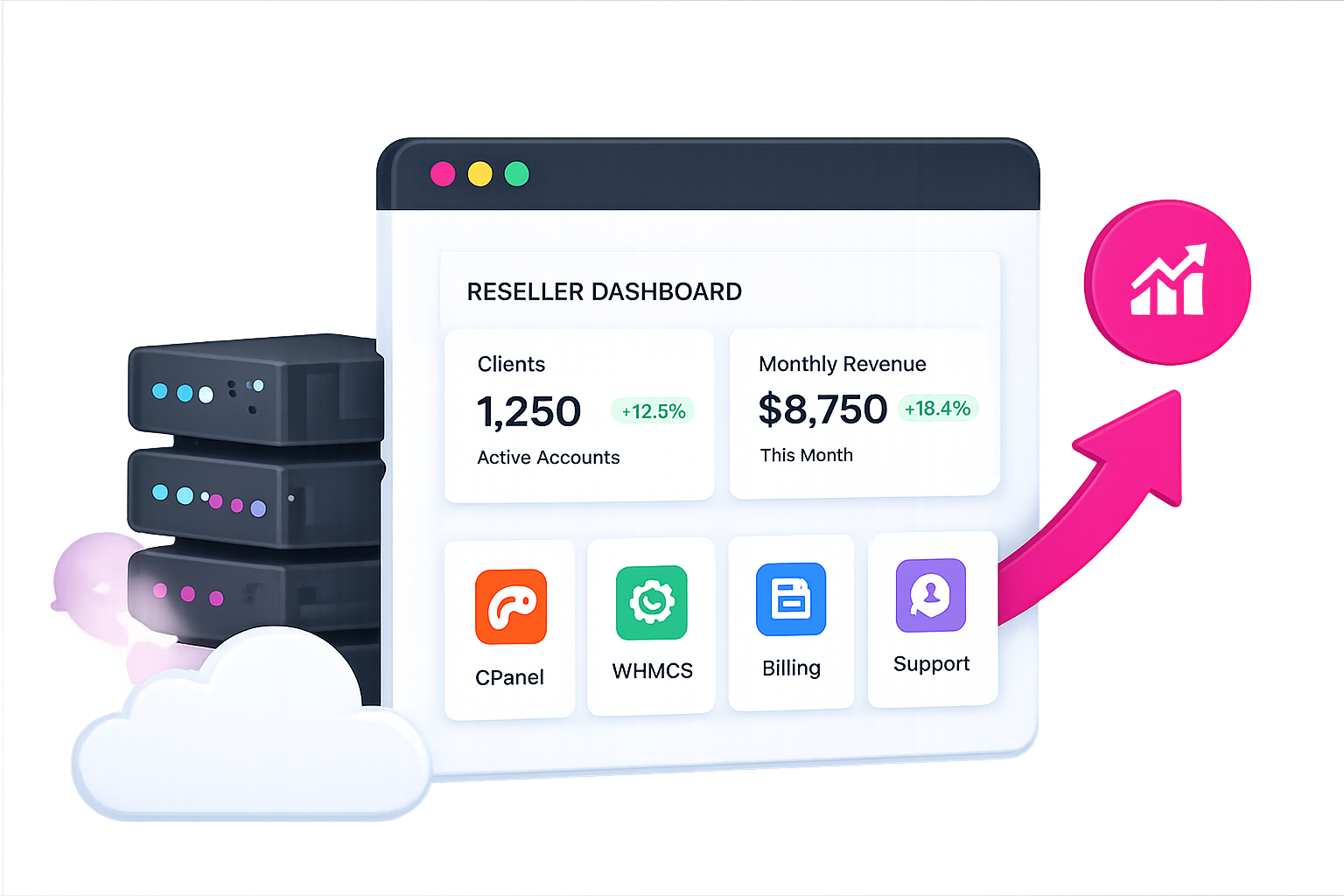
White-label hosting makes all of that possible without owning a single server. You rent the infrastructure wholesale, brand it completely as your own, and sell it at your own price to clients who only ever see your name on every invoice, every email, and every control panel they log into.
This guide walks through every stage of that process. From choosing the right infrastructure partner to landing your first paying clients and keeping them long enough to build the recurring revenue that makes this business model genuinely worth building.
What Is a White-Label Hosting Brand?
How White-Label Hosting Works
White-label hosting is a business model where you purchase hosting resources at wholesale prices from an infrastructure provider and resell them to end clients under your own brand name. The provider supplies the servers, the network infrastructure, the security maintenance, and the technical uptime. You supply the brand, the pricing, the client relationships, and the sales.
Your clients never interact with the underlying provider. They log into a control panel that carries your logo. They receive invoices with your company name. They email your support address. They renew through your client portal. The provider is invisible. Your brand is everything they see.
Think of it the way a supermarket thinks about own-brand products. The manufacturing happens somewhere else. The branding, the shelf space, and the customer relationship belong entirely to the retailer. The customer buys the retailer’s product. The manufacturer is irrelevant to that transaction.
Difference Between Reseller Hosting and Owning Infrastructure
Owning hosting infrastructure means buying or leasing physical servers, paying for data center rack space, managing network connectivity, hiring network engineers, and carrying the capital and operational costs of a genuine technology company. That is the version of this business that requires millions in funding and years of runway before it becomes profitable.
Reseller hosting through a white-label partner requires none of that. You pay a monthly wholesale fee for a defined allocation of server resources. The provider handles every technical layer beneath the surface. Your startup cost is measured in tens of dollars per month, not millions. Your first three paying clients cover the infrastructure cost entirely.
The trade-off is that you do not own the underlying infrastructure. The provider’s reliability becomes your reliability. Choosing that provider correctly is the most consequential decision you make in this business.
Why Entrepreneurs Choose White-Label Hosting
Recurring revenue is the primary reason. A client who pays you $25 a month for hosting pays you $300 a year. If they stay for three years, which hosting clients reliably do when the service is good, that single client generates $900 from an initial onboarding conversation that took 30 minutes.
Project-based income stops when the project ends. Hosting income continues whether you do anything new or not. For a freelancer, agency owner, or entrepreneur who wants to build income that does not require constant re-selling, white-label hosting creates the recurring base that everything else can be built on top of.
Why White-Label Hosting Is a Popular Business Model
| Business Model | Startup Cost | Revenue Type | Income at 50 Clients | Scales Without Hiring? |
| White-label hosting | $10 to $100/month | Monthly recurring | $750 to $2,000/month | Yes |
| Freelance web design | $0 to $500 | Project-based | Inconsistent | No |
| Digital marketing agency | $500 to $5,000 | Retainer or project | $5,000 to $15,000/month | Requires hiring |
| SaaS product | $10,000 to $100,000+ | Monthly recurring | Variable | Yes, but complex |
| Ecommerce store | $500 to $5,000 | Per-transaction | Variable | Partially |
Low Startup Costs
A white-label hosting business can be operational for under $20 in its first month. A reseller hosting plan at $6.95 a month. A domain name for your brand at roughly $12 a year. That is the entire capital requirement to launch a branded hosting company with automated billing, a client portal, and a complete product catalog.
Compare that to any other business model that generates recurring monthly revenue. The barrier to entry is lower than almost anything else in the digital services space, and the infrastructure cost stays flat as you add clients rather than scaling with each new customer.
Recurring Monthly Revenue Potential
The arithmetic of recurring revenue is what makes this business model worth taking seriously. At $20 per client per month, ten clients generate $200 a month. Twenty clients generate $400. Fifty clients generate $1,000. None of those numbers require any new sales in the month they arrive. The revenue exists because of work you did previously.
Add maintenance bundles, SSL addons, domain management services, and email hosting to your product catalog and the average revenue per client climbs further. A client base of 50 accounts paying an average of $35 a month generates $1,750 in monthly recurring revenue that arrives whether you take on a single new client that month or not.
Scalability Without Managing Data Centers
Scaling a white-label hosting business means getting more clients, not buying more servers. The infrastructure scales beneath you when you need more resources. Your job is customer acquisition and relationship management. The provider’s job is everything at the server level.
That separation of responsibilities is what makes the business scalable for a solo operator or small team. You are not limited by how many servers you can afford or how many engineers you can hire. You are limited only by how many clients you can serve well, and good service at the client relationship level is something one person can deliver to dozens of accounts simultaneously.
Step 1: Choosing the Right Hosting Infrastructure Partner
Reliability and Uptime Considerations
Your provider’s uptime is your uptime. Your provider’s downtime is your downtime. When a client’s website goes offline, they call you. They do not care that the problem is at the infrastructure level rather than something you control. The client relationship is yours. The consequences of poor uptime land on your brand.
Look for a provider with a documented 99.9% uptime SLA backed by a compensation policy, not just a marketing claim. Test their support before you commit. Send a technical question at midnight on a weekend and see how quickly and how helpfully they respond. That response represents the support you will receive when a real client’s site goes down at the worst possible moment.
White-Label Capabilities to Look For
Full white-label capability means your brand appears at every touchpoint without exception. Not most touchpoints. Every one.
Custom nameservers: When a client or their developer looks up the nameservers for a hosted domain, they should see your brand name, not your provider’s. ns1.yourbrand.com and ns2.yourbrand.com, not the provider’s nameserver addresses.
Branded control panel: The cPanel interface your clients log into should carry your logo and company name. No provider branding visible anywhere in the interface.
Branded billing system: Every invoice, every payment confirmation, every overdue reminder should carry your company name and logo. WHMCS handles this when configured correctly with your brand assets.
Branded email communications: Welcome emails, support ticket responses, and account notifications should come from your domain and carry your branding throughout.
Scalability and Support Quality
Choose a provider whose plan structure allows your business to grow without a disruptive platform migration. A provider whose entry-level reseller plan is a dead end requiring a full account migration when you outgrow it costs you time, client relationship risk, and technical complexity at exactly the moment your business is growing fastest.
SkyNetHosting.Net offers reseller plans that scale from entry level through to dedicated server options within the same infrastructure environment. The WHM and cPanel stack stays consistent. Your WHMCS integration stays connected. Growth is a plan upgrade, not a platform rebuild.
Step 2: Building Your Hosting Brand Identity
Choosing a Niche and Positioning
The most common mistake new hosting brands make is trying to compete with GoDaddy by being a general-purpose hosting company. You will not win that fight. GoDaddy has a billion-dollar marketing budget and decades of brand recognition. You have a reseller plan and a list of people who already trust you.
Use the trust. Niche down. A hosting company positioned specifically for local restaurants, or for e-commerce stores in a specific industry, or for freelancers and solo entrepreneurs, or for healthcare practice websites competes in a completely different frame than a generic hosting provider. Your clients are not choosing between you and GoDaddy. They are choosing between you and the effort of figuring out hosting themselves. You win that comparison every time if your positioning is clear and your service is personal.
Niche by industry: Healthcare hosting, real estate hosting, hospitality hosting. Every industry has compliance needs, common platform choices, and trust signals that a specialized host can address directly.
Niche by client type: Freelancers and agencies need different things from hosting than small businesses do. Position for one and build your product catalog around their specific needs.
Niche by geography: Local and regional positioning creates trust through proximity. A business owner in your city is more likely to trust a local hosting provider they can actually talk to than a faceless multinational.
Creating a Professional Website
Your hosting brand’s website needs to answer three questions for every visitor in under ten seconds. What do you sell. Who do you sell it to. Why should they trust you over the alternatives.
A clean, professional website with clear pricing, a visible phone number or contact method, client testimonials, and an obvious signup flow converts better than a feature-heavy site that buries the purchase path under layers of information. Visitors who cannot quickly find how to buy from you leave and do not return.
Start with three pages. A homepage that communicates your positioning and leads to your plans. A plans page with clear pricing and a signup button. A contact page with a form, an email address, and your business location if you are operating locally. That is enough to launch and start selling. Expand the site as your business grows and you understand what information your clients actually need before they convert.
Designing Trust-Focused Branding
Hosting is a trust business. Clients are giving you custody of their website, their email, and their business data. Before they do that, they need to believe you are legitimate, stable, and capable.
Trust signals that matter in hosting include a professional logo and consistent visual identity, a business email address on your own domain rather than Gmail, visible uptime statistics or SLA commitments, client testimonials from identifiable businesses, and clear contact information. Each of these is a signal that your business is real and that you will still be there when something needs attention.
Invest in a professional logo. Use your brand domain for all communications. Display your SLA. Get three testimonials from your first three clients and put them on your homepage. These are not optional polish items. They are the trust architecture that converts visitors into paying clients.
Step 3: Setting Up WHMCS and Hosting Automation
Automated Account Provisioning
WHMCS is the engine that makes a white-label hosting business operationally viable. Without it, every new client signup requires manual account creation, manual welcome email drafting, and manual billing setup. With it, the entire process from payment to active hosting account to welcome email happens automatically in under two minutes.
Connect WHMCS to your WHM server using the cPanel server module. Test the connection using WHMCS’s built-in server test function. Create a test product and place a test order to verify that payment triggers automatic account provisioning. Do not accept your first paying client until you have confirmed that this provisioning chain works correctly from end to end.
Billing and Invoicing Setup
Configure your payment gateway before anything else. Stripe, PayPal, and direct card processing all integrate with WHMCS in a few configuration steps. Your payment gateway is the trigger that fires every automated action in your business. Nothing else works correctly until payments are connected.
Set your invoice generation timing to send invoices 14 days before the billing cycle date. Configure payment reminder emails at 7 days, 3 days, and 1 day before due date. Set your overdue reminder to fire 3 days after the due date and your suspension threshold to 14 days past due. These settings create a professional, consistent payment process that requires zero manual intervention for the vast majority of clients.
Client Management Workflows
WHMCS support ticketing replaces a personal email inbox as your client communication channel from the moment your first client goes live. Every support request should enter through the ticketing system so it is tracked, responded to with a documented time, and associated with the client’s account history.
Configure your WHMCS welcome email template before your first signup. This is the first communication a new client receives from your brand after payment. It should include their cPanel login URL, their login credentials, their nameserver addresses, and a clear explanation of how to contact support. A professional, complete welcome email sets the tone for the entire client relationship.
Step 4: Creating Hosting Packages and Pricing
| Plan Name | Monthly Price | Reseller Cost | Margin | Best For |
| Starter | $15/month | ~$2 to $3 | $12 to $13 | Brochure sites, portfolios |
| Business | $25/month | ~$4 to $5 | $20 to $21 | SME websites, blogs |
| Pro | $40/month | ~$7 to $8 | $32 to $33 | WooCommerce, higher traffic |
| Maintenance Bundle add-on | +$30/month | ~$0 extra server cost | $28 to $30 | All plan tiers |
| Annual prepay (Business) | $240/year | ~$48 to $60 | $180 to $192 | Stable, long-term clients |
Shared Hosting Plans
A three-tier structure is the standard that converts best and is the simplest to explain. Starter, Business, Pro. Each tier should have clearly differentiated storage, bandwidth, and email account limits so clients can self-select the right tier based on their site’s requirements.
Price your plans based on value delivered, not on what your wholesale cost suggests. A client paying you $25 a month is paying for managed hosting, personal support, and the confidence that someone who knows their site is available when something goes wrong. That is worth significantly more than the commodity price that shared hosting is sold at by volume providers.
Reseller and VPS Upgrade Paths
Configure upgrade paths within WHMCS so clients can move between your tiers without contacting you. A client whose site has grown beyond their Starter plan’s resources should be able to review the Business plan and upgrade directly from their client area. WHMCS handles the billing pro-ration and the resource adjustment automatically.
For clients who eventually outgrow your shared hosting tiers entirely, a VPS upgrade option extends your relationship rather than sending them to a competitor. If your provider offers VPS plans, add them to your WHMCS product catalog as a premium tier. Clients who stay with you through their growth journey are worth significantly more over time than clients who leave because you had no answer to their scaling needs.
Profit Margin Strategies
The maintenance bundle is the highest-margin addition to any hosting plan and the one that most resellers underutilize. A $30 a month maintenance bundle covering plugin updates, security monitoring, monthly performance reports, and uptime alerts costs you almost nothing in server resources and requires roughly 30 to 45 minutes of work per client per month.
At 20 clients on maintenance bundles at $30 each, that is $600 a month in additional revenue from work that is largely systematized and repeatable. Combined with base hosting fees, a 20-client business with bundled maintenance generates over $1,100 a month in recurring revenue. The bundle is not an upsell. It is the product that makes the business profitable at small scale.
Step 5: How to Get Your First Paying Hosting Customers
Selling to Existing Web Design Clients
This is the fastest path to your first paying hosting clients and the one that requires the least explanation or persuasion.
If you have ever built a website for anyone, that person currently pays someone for hosting. It is almost certainly not personal, attentive, or bundled with any kind of ongoing support. It is a shared hosting plan they set up themselves from a provider they found through an ad, and they vaguely dread the day something goes wrong with it because they have no idea what to do.
You already have the relationship. You already have the credibility. The conversation is simply: I now offer managed hosting that keeps your site fast, secure, and backed up, and I handle everything if something goes wrong. Most clients say yes before you finish the sentence.
Email five past clients today. Not a bulk newsletter. Individual emails that reference their specific site and what they are currently doing for hosting. That personal touch is the entire competitive advantage of a small hosting brand, and it starts before a single client has signed up.
SEO and Content Marketing
A hosting brand with a blog that answers the questions its target clients actually search for generates inbound leads without ongoing ad spend. The content compounds over time. A post that ranks for how to move my WordPress site to a new host, or what does managed hosting mean for small businesses, or best hosting for WooCommerce in your city, continues driving traffic and conversions months and years after it was written.
Start with ten articles that directly answer the questions your target clients ask before they buy hosting. Publish one per week. Optimize each one for a specific search query. Build internal links between related articles. This is not overnight traffic. It is the traffic channel that costs nothing once it is established and that your competitor who relies only on referrals does not have.
Local Business Outreach Strategies
Approximately 28 percent of small businesses in most markets still do not have a website. Every one of them is a potential client for a local hosting brand that offers to handle the entire web presence, from domain registration through site build through ongoing hosting and maintenance, as a single monthly package.
Walk into three local businesses this week. Not with a brochure. With a specific observation about their online presence and a clear offer that solves a problem they recognise. A restaurant with no online menu. A tradesperson with no way to request a quote online. A retailer with a Facebook page but no website. Each of these is a problem you can solve for a monthly fee that is less than they spend on any other service provider they use regularly.
Step 6: How to Retain Hosting Customers Long-Term
Reliable Support and Uptime
Client retention in hosting is almost entirely determined by two things. Whether the site is up, and whether someone helpful responds quickly when something goes wrong.
Uptime is your provider’s responsibility at the infrastructure level. Choose a provider with a genuine SLA and 24/7 technical support so that server-level issues get resolved without waiting for business hours. Your responsibility is the first-line client communication: acknowledging the issue quickly, explaining what is being done, and updating the client until resolution.
A client whose site experienced downtime and received a prompt, professional response from you walks away from that incident with more confidence in your service than one whose site ran perfectly for a year without any interaction. Problems handled well build deeper trust than the absence of problems.
Website Maintenance Services
A maintenance retainer converts a hosting client into a more valuable, more sticky, and more profitable long-term relationship. When you are actively working on a client’s site every month, updating plugins, checking performance, reviewing security logs, and sending a monthly summary report, the switching cost for that client becomes significantly higher.
They are not just moving their hosting. They are ending an active service relationship with someone who knows their site, their history, and their preferences. That is a much harder decision than switching a commodity hosting plan. Maintenance services are the retention mechanism that transforms month-to-month clients into multi-year relationships.
Upselling Backups, SSL, and Email Hosting
Every hosting client is a warm prospect for adjacent services they already need. Most of them have not thought carefully about whether those needs are currently met.
Daily backups: Most clients assume their hosting provider backs up their site automatically. Many providers do not, or do so infrequently. A $5 to $10 monthly backup addon addresses a genuine risk the client has probably not considered. The conversion rate on this offer is high precisely because it is easy to explain and the downside of not having it is obvious.
SSL certificates: Any client without HTTPS is exposing their site to browser security warnings and Google ranking penalties. This is a problem you can fix in minutes and charge for monthly. The value is immediate and visible.
Professional email hosting: A client using Gmail or Yahoo for their business email while their domain sits on your hosting server is missing an obvious upgrade. Professional email on their own domain, managed through your hosting account, is a $5 to $10 monthly addon that significantly improves their brand professionalism and deepens their relationship with your platform.
Common Mistakes New White-Label Hosting Brands Make
Choosing Unreliable Infrastructure
The mistake: Selecting a reseller hosting provider based on the cheapest available plan without evaluating uptime history, support quality, or white-label capability. The first time a client’s site goes down during a business-critical period and the provider takes 8 hours to respond, the damage to your brand is real and difficult to repair.
The fix: Test your provider before you launch. Send a support ticket at an unusual hour. Check their uptime history through independent monitoring services. Read reviews from other resellers. The extra due diligence takes a few hours and protects the reputation you are about to spend months building.
Competing Only on Price
The mistake: Setting hosting prices based on being cheaper than GoDaddy rather than on the value your service delivers. Competing on price against providers with economies of scale you will never match is a strategy that guarantees thin margins, low-quality clients, and no differentiation.
The fix: Compete on service, relationship, and expertise. Your clients are not paying for the cheapest available hosting. They are paying for managed hosting from someone they trust who will handle problems personally and who knows their site by name. Price that service accordingly. Charge what the relationship and the peace of mind are worth.
Ignoring Branding and Support Quality
The mistake: Launching a white-label hosting brand with a generic website, no clear positioning, and support that comes from a personal Gmail inbox without any ticketing system or defined response time standards. Clients who experience inconsistent or slow support leave, and they tell others about it.
The fix: Invest in your brand before you launch and in your support process from the moment your first client goes live. A professional logo, a domain email address, a clear tagline, and a WHMCS ticketing system configured before client one costs very little and signals everything about how seriously you take the business.
How Does SkyNetHosting.Net Support White-Label Hosting Businesses?
Scalable Reseller Hosting Infrastructure
SkyNetHosting.Net reseller plans include WHM, cPanel, WHMCS, and full white-label branding as standard features across all plan tiers. The infrastructure is built on NVMe SSD storage and LiteSpeed web server technology, which means the hosting you sell to your clients performs at a level that justifies premium pricing and supports strong retention.
Plans start at $6.95 a month. Your first three paying clients at any reasonable pricing cover the plan cost entirely. The infrastructure investment required to launch your branded hosting business is genuinely that low.
Fully White-Label Hosting Environment
SkyNetHosting’s white-label setup covers every client touchpoint. Your logo in the cPanel interface. Your company name on every invoice and automated email. Custom nameservers set to your brand domain so that every DNS lookup your clients or their developers perform returns your name rather than the provider’s.
Softaculous one-click installer gives your clients access to over 400 applications including WordPress, WooCommerce, Joomla, and Drupal directly from their cPanel. They install their preferred platform themselves without opening a support ticket. You look capable and professional. The provider remains invisible throughout.
Reliable Performance for Growing Hosting Brands
A 99.9% uptime SLA backed by 24/7 live technical support means the infrastructure underneath your brand stays operational when your clients need it. Server-level issues get resolved by SkyNetHosting’s engineering team around the clock, not after a business-hours delay that turns a short outage into a long one.
As your client base grows and your revenue justifies it, upgrade paths to higher-tier reseller plans and dedicated servers are available within the same infrastructure environment. Your WHMCS setup stays connected. Your branding stays intact. Growth is a plan change, not a platform migration.
Conclusion
White-Label Hosting Allows Entrepreneurs to Build Recurring-Revenue Businesses Without Owning Servers
The hosting market is not locked. It is distributed across hundreds of thousands of providers, the majority of them small resellers building real businesses on the same model this guide describes. The opportunity is not shrinking. It is growing alongside the 252,000 new websites that launch every single day.
You do not need servers. You do not need a networking degree. You need a reliable infrastructure partner, a brand that communicates trust, a billing system that handles the operational mechanics automatically, and a list of people who already believe in your ability to solve their problems. Most people reading this guide already have that list.
Branding, Automation, and Customer Trust Are Key to Long-Term Success
The technical setup of a white-label hosting business takes less than two hours. The business itself is built over months and years through consistent service, responsive support, and the compound effect of a recurring revenue model that pays you every month for work you did once.
Brand every touchpoint. Automate every repeatable process. Compete on relationship quality rather than price. Solve real problems for real clients who already trust you. That is not a complicated strategy. It is a straightforward one that works reliably for anyone willing to execute it with consistency.
SkyNetHosting.Net Provides Infrastructure Designed for Scalable White-Label Hosting Businesses and Agency Growth
SkyNetHosting.Net reseller plans include everything your white-label hosting brand needs to launch and scale: free WHMCS, full white-label branding, NVMe storage, LiteSpeed performance, Softaculous one-click installers, free SSL, and 24/7 live support under a documented uptime SLA.
The infrastructure is ready. The tools are included. The first three clients pay for everything.
The only remaining question is when you send that first email.
View SkyNetHosting Reseller Plans and Start Building Your Brand Today
Free WHMCS | Full White-Label Branding | NVMe Storage | 24/7 Live Support | From $6.95/month

One thought on “How White-Label Hosting Brands Are Built: From Zero to Paying Customers”